


Will 2031 mark a golden era of development for global electric vehicle cable assemblies?
2026-03-18 10:40Global Electric Vehicle Cable Assemblies Enter Golden Era: Set to Reach $622 Million by 2031, with an 8.0% CAGR
Product Definition and Application
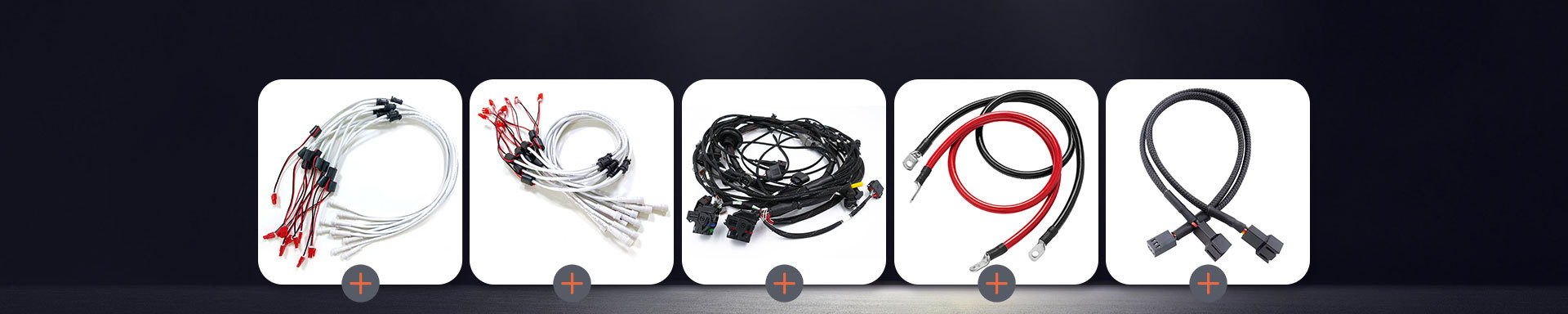
Electric vehicle (EV) cable assemblies are pre-fabricated cabling systems specifically designed for electric vehicles, integrating multiple wires or cables, connectors, protective sheathing, and—in some cases—shielding layers. They ensure the reliable transmission of power, control signals, and data within the vehicle's electrical and electronic systems.
Global Market Size Overview
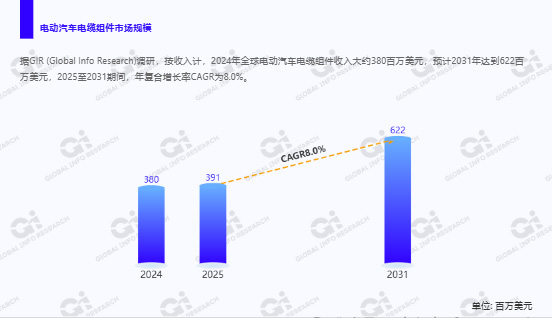
According to research by Global Info Research, the global market for electric vehicle (EV) cable assemblies is estimated to generate revenue of approximately $380 million in 2024. This figure is projected to reach $622 million by 2031, representing a Compound Annual Growth Rate (CAGR) of 8.0% over the period from 2025 to 2031.
Manufacturer Rankings and Market Share
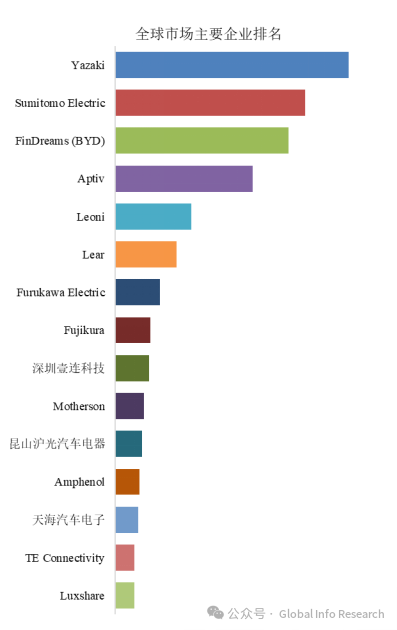
Globally, major manufacturers of electric vehicle cable assemblies include Yazaki, Sumitomo Electric, FinDreams (BYD), Aptiv, and Leoni, with the top five manufacturers holding approximately 42.6% of the market share.
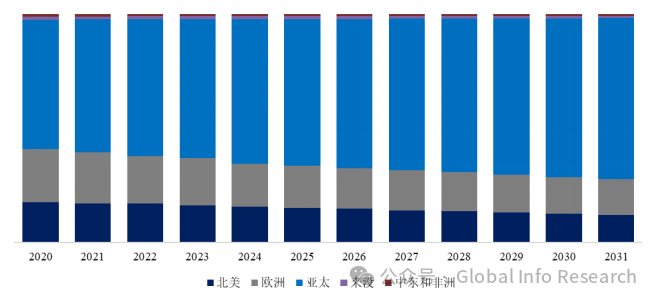
Currently, core global manufacturers are mainly located in Europe and the Asia-Pacific region.
Major Market Size
Industry Chain Analysis
Upstream (Raw Material & Component Suppliers) — Conductors & Wires: Nexans, Prysmian Group, Leoni Group, LS Cable & System; Insulation & Sheathing Materials: Dow Chemical, DuPont, Covestro, 3M; Connectors & Terminals: TE Connectivity, Amphenol, HUBER+SUHNER, Yazaki. Overview: The upstream segment supplies high-voltage/high-current conductors, insulation materials, protective sheathing, and connectors, constituting the core components of electric vehicle (EV) wiring harness assemblies.
Downstream (End Customers & System Integrators) — EV Manufacturers: Tesla, BYD, NIO, Volkswagen, Hyundai-Kia; EV Powertrain & Component Manufacturers: LG Energy Solution, CATL, Bosch, Magna, ZF; Charging Infrastructure Providers: ChargePoint, ABB, Siemens, Schneider Electric.
Overview: The downstream segment consists of EV manufacturers, powertrain/component suppliers, and charging infrastructure providers, who integrate wiring harness assemblies for high-voltage power distribution, battery management, motor connectivity, and in-vehicle electronic systems.
Key Factors Influencing Industry Development
1. Key Drivers
Driver 1: Rapid Growth of the EV Market. Global sales of new energy vehicles (NEVs) continue to climb—particularly in the markets of China, Europe, and North America—driving immense demand for EV cable assemblies. As EVs rely on high-voltage battery systems and high-power motors, cable assemblies serve as a critical link in power transmission and energy management.
Driver 2: Technological Upgrades and Heightened Performance Requirements. High-voltage (HV), ultra-high-voltage (UHV), and multi-functional cable assemblies are required to meet stringent performance criteria, including rapid charging capabilities, high-temperature resistance, flame retardancy, waterproofing, and electromagnetic interference (EMI) shielding. Motors, batteries, charging systems, and intelligent management systems impose increasingly rigorous demands on the reliability and safety of cable assemblies, thereby driving upgrades in materials and manufacturing processes.
2. Key Challenges / Barriers
Challenge 1: High Costs and Reliance on Raw Materials. High-performance materials—such as copper, aluminum, insulation compounds, and shielding materials—are costly, particularly given the strict material specifications required for high-voltage cables. Core raw materials—such as high-conductivity copper and heat-resistant insulation—are often sourced from a limited number of suppliers, creating supply chain risks and exposing the industry to price volatility.
Challenge 2: High Technical and Regulatory Barriers. EV cable assemblies must comply with various international and national standards (e.g., ISO 6469, GB/T 18384, and UL/IEC standards), resulting in lengthy R&D and certification cycles. Against the backdrop of the rapid expansion of the NEV sector, the high technical demands associated with flexible high-voltage harnesses, intelligent monitoring cables, and lightweight designs serve as significant barriers to entry for new market participants.
3. Industry Opportunities
Opportunity 1: Expansion of NEVs and Charging Infrastructure. The global increase in the EV fleet is driving demand for power cables, signal cables, and in-vehicle wiring harnesses; concurrently, the expansion of charging piles and Vehicle-to-Grid (V2G) systems necessitates large quantities of high-performance cables. Furthermore, policy support and subsidies provided by national and local governments for the NEV industry are fostering the holistic development of the entire industry value chain.
Opportunity 2: New Technologies and Intelligent Development. Advancements in rapid charging technology, motor control systems, and in-vehicle communication networks are propelling the evolution of cable assemblies toward higher voltage capacities, lighter weights, modular designs, and enhanced intelligence. Intelligent cable assemblies—which integrate functions such as temperature monitoring, current sensing, and system health management—are poised to emerge as a key new growth driver in the future market.