

How Does a Reliable SH1.0mm Wire to Board Wire Harness Supplier Guarantee Consistent Connector Crimping Quality?
2026-09-09 10:48When purchasing SH1.0mm wire to board wire harnesses, many buyers focus first on connector type, wire length, terminal configuration, and unit price. However, for electronic equipment manufacturers, the real quality difference often appears in a less visible area: connector crimping consistency.
A wire harness may look perfectly assembled while still having inconsistent crimp height, insufficient terminal retention, conductor damage, exposed copper strands, or unstable electrical contact. These problems can result in intermittent connections, assembly failures, vibration-related faults, and costly field returns.
For this reason, choosing a reliable SH1.0mm wire to board wire harness supplier requires more than checking product samples. Buyers should evaluate how the supplier controls wire preparation, terminal crimping, tooling, inspection, testing, and production traceability.
Xiamen Evershine provides wire and cable, wire harness, and cable assembly solutions with a focus on controlled manufacturing processes and application-specific customization.
1. The User Problem: Why Is Consistent Crimping So Important for SH1.0mm Wire Harnesses?
SH1.0mm wire-to-board connectors are commonly used where compact dimensions, reliable signal or power transmission, and space-efficient wiring are required.
Because the connector and terminal are relatively small, the crimping process has limited tolerance for production variation.
A poor crimp can create several problems:
Low terminal pull-out force
High or unstable contact resistance
Damaged conductor strands
Loose terminal connection
Incomplete conductor insertion
Insulation caught incorrectly in the conductor barrel
Intermittent electrical contact
Difficult PCB assembly
Premature harness failure under vibration
The challenge for buyers is that visual inspection alone cannot always identify a marginal crimp.
A professional supplier therefore needs a process-based quality system rather than relying only on final inspection.
What Should Buyers Ask a Wire Harness Supplier?
Before placing a bulk order, procurement teams should ask:
What crimping equipment is used?
How is the crimp height controlled?
Is terminal pull force tested?
How are crimping tools maintained?
Are conductor and insulation crimping areas controlled separately?
How does the factory prevent wrong terminal or wire combinations?
Is first-piece inspection performed before mass production?
Can the supplier provide production and inspection records?
These questions reveal much more about manufacturing capability than simply asking whether the factory can produce an SH1.0mm harness.
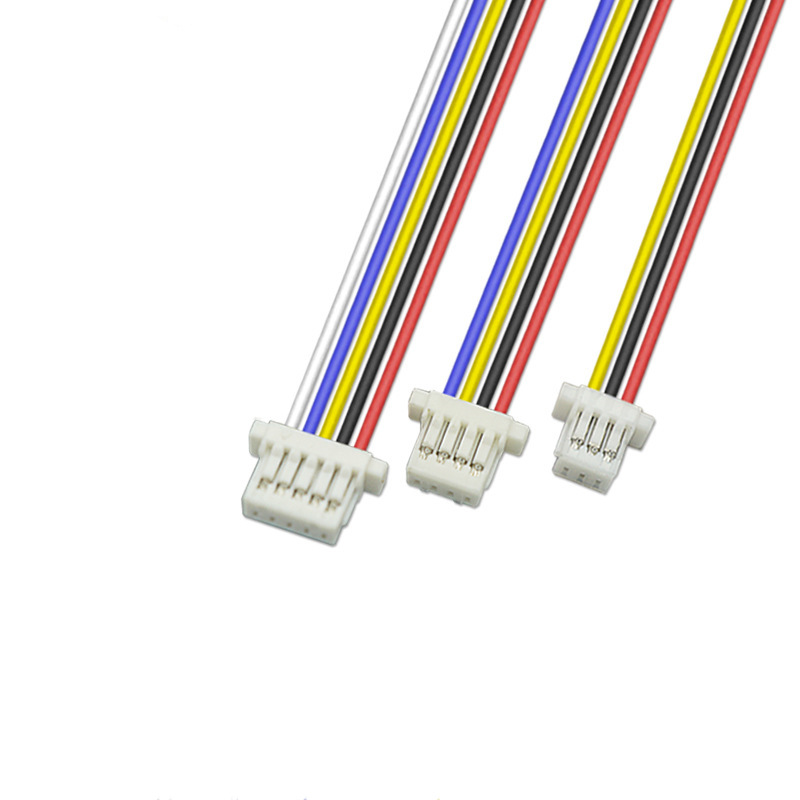
2. Product Selection: Choosing the Right SH1.0mm Wire to Board Wire Harness
The connector alone does not determine harness performance.
A complete wire-to-board assembly consists of multiple elements working together:
Wire + Terminal + Housing + Crimping Process + Assembly + Testing
Therefore, selecting an SH1.0mm wire harness should begin with the electrical and mechanical requirements of the application.
Key Selection Factors
Wire Specification
The wire gauge, conductor structure, insulation material, voltage rating, temperature rating, and flexibility should match the equipment requirements.
Depending on the application, buyers may specify:
Wire gauge
Number of conductors
Conductor material
Insulation material
Wire color
Wire length
Strip length
Voltage/current requirements
Temperature resistance
Flame-retardant requirements
Connector Configuration
The connector configuration may include:
Number of positions
Wire-to-board configuration
Pitch
Housing orientation
Contact arrangement
Locking structure
Mating direction
Cable exit direction
Terminal Compatibility
The terminal must be matched with the selected wire size and connector housing.
This is particularly important because an apparently compatible terminal may still produce an unstable crimp if the conductor diameter, insulation diameter, or terminal barrel dimensions do not match the specified tooling.
A professional SH1.0mm wire to board wire harness supplier should therefore confirm the complete wire-terminal-tooling combination before production.
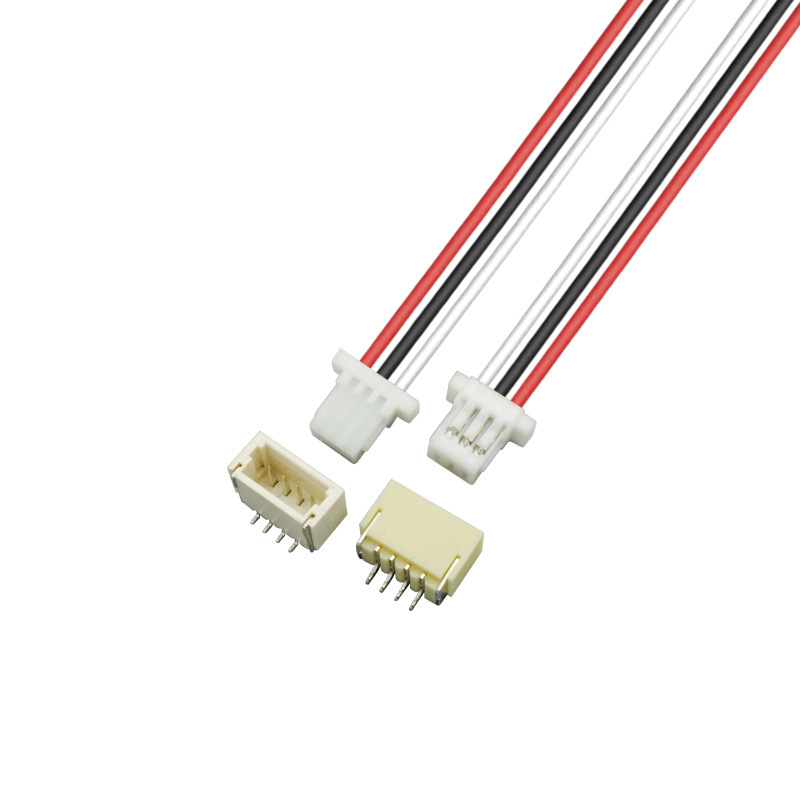
3. Technical Parameters: How Does a Factory Control Crimping Consistency?
The most important difference between a basic assembler and a professional wire harness manufacturer is usually process control.
A reliable supplier should establish controlled parameters for every crimping operation.
3.1 Controlled Crimp Height
Crimp height is one of the important parameters affecting terminal performance.
If the crimp is too loose, the conductor may not be securely retained.
If the crimp is too tight, conductor strands can be excessively compressed or damaged.
The target crimp height should therefore be established according to the applicable terminal and tooling specifications rather than adjusted arbitrarily by operators.
3.2 Proper Stripping Length
Before crimping, the wire must be stripped to a controlled length.
Excessive stripping may leave too much exposed conductor.
Insufficient stripping may prevent the conductor from reaching the correct position inside the terminal barrel.
A controlled stripping process helps ensure that the conductor reaches the designed crimping area while the insulation remains properly positioned.
3.3 Conductor Crimp and Insulation Crimp
A properly designed terminal connection normally has two functional areas:
Conductor crimp:
Secures the stripped conductor and establishes the electrical connection.
Insulation crimp:
Provides additional mechanical support and reduces stress transmitted directly to the conductor.
Both areas need to be controlled.
A visually attractive crimp is not necessarily a mechanically reliable crimp if the conductor barrel is improperly formed.
3.4 Crimp Force Monitoring
For higher-volume or higher-reliability production, monitoring crimping force can provide another layer of process control.
Abnormal force curves may indicate:
Incorrect terminal feeding
Missing conductor
Incorrect wire size
Terminal deformation
Tooling wear
Material variation
This allows potential problems to be identified during production instead of waiting until final assembly.
3.5 Terminal Pull Force Testing
Pull-force testing helps verify whether the crimped terminal has adequate mechanical retention.
The test value depends on the wire, terminal, conductor size, and applicable specification.
A reliable supplier should define acceptance criteria based on the relevant terminal manufacturer's requirements, customer specifications, or recognized industry standards.
This is particularly valuable when the harness will operate in environments involving vibration or repeated mechanical movement.
4. Application Scenarios: Where Does SH1.0mm Wire Harness Quality Matter Most?
SH1.0mm wire-to-board assemblies can be used in compact electronic and electrical systems where space and reliable connection are important.
Typical applications may include:
Consumer Electronics
Compact wiring harnesses can connect PCBs, control boards, displays, sensors, switches, and other electronic modules.
Smart Home Equipment
Wire-to-board harnesses can be integrated into control modules, sensors, actuators, lighting systems, and compact electrical devices.
Industrial Electronics
Industrial control equipment may require customized harnesses for PCB connections, control panels, sensors, and internal wiring.
Small Appliances
Customized wire harnesses can simplify internal assembly and provide standardized connections between PCBs and electrical components.
LED and Lighting Equipment
Compact connectors can help organize internal wiring while supporting efficient installation and maintenance.
Automotive and Transportation Electronics
Where the specification permits, compact wire-to-board harnesses may be used for electronic modules, sensors, displays, and control systems. However, automotive applications require additional consideration of temperature, vibration, environmental resistance, and applicable automotive standards.
The correct harness specification should always be determined according to the actual electrical, mechanical, environmental, and regulatory requirements of the end product.
5. Purchasing Decision: How to Evaluate an SH1.0mm Wire Harness Supplier?
For procurement teams, comparing suppliers only by price can create hidden costs.
A lower initial unit price may become expensive if the supplier produces inconsistent terminals, high rejection rates, unstable delivery, or excessive manual rework.
Instead, buyers should evaluate suppliers across several dimensions.
| Evaluation Item | What Buyers Should Check |
|---|---|
| Wire quality | Gauge, material, insulation and specifications |
| Connector | Housing, pitch, positions and compatibility |
| Terminal | Material, plating and applicable wire range |
| Crimping | Crimp height, tooling and process control |
| Pull force | Defined testing criteria and records |
| Electrical testing | Continuity and short-circuit inspection |
| Visual inspection | Terminal position, wire length and assembly quality |
| Tooling management | Maintenance and replacement procedures |
| Production traceability | Batch and process records |
| Customization | Wire length, connector and terminal options |
| Delivery | Production capacity and lead-time control |
| Quality support | Sample approval, corrective action and technical communication |
Why Sample Approval Is Not Enough
A sample only proves that a supplier can produce one acceptable harness.
The more important question is whether the supplier can produce thousands of harnesses with similar characteristics.
That means procurement teams should evaluate repeatability, not just sample appearance.
6. Factory Solution: How Xiamen Evershine Builds Consistent Wire Harnesses
For a professional wire harness manufacturer, quality should be controlled throughout the manufacturing process.
Xiamen Evershine focuses on wire and cable, wire harness, and related customized cable assembly solutions for customers with different connection and application requirements.
For an SH1.0mm wire-to-board harness project, the production process can be organized around several control points.
Step 1: Specification Confirmation
Before production, the supplier should confirm:
Wire specification
Wire length
Connector model
Terminal model
Number of circuits
Pin configuration
Strip length
Crimp requirements
Electrical requirements
Packaging requirements
This prevents specification errors from entering mass production.
Step 2: Incoming Material Verification
Wire, terminals, housings, and other materials should be checked against the approved specifications.
Wrong or mixed materials can create quality problems even when the crimping machine itself is operating normally.
Step 3: Wire Cutting and Stripping
Automated or controlled wire-processing equipment helps maintain consistent wire length and stripping dimensions.
Step 4: Terminal Crimping
The terminal and wire combination should use compatible tooling.
Operators should follow defined setup parameters instead of relying entirely on visual judgment.
Step 5: First-Piece Inspection
Before mass production, the first completed harnesses should be inspected and confirmed against the approved specifications.
This is an important checkpoint because problems can be corrected before they are repeated across a large batch.
Step 6: In-Process Inspection
During production, quality control should monitor critical characteristics such as:
Wire length
Terminal position
Connector orientation
Crimp appearance
Crimp dimensions
Conductor insertion
Housing locking
Circuit continuity
Step 7: Electrical Testing
Depending on the project requirements, harnesses may undergo continuity and short-circuit testing to identify incorrect wiring or connection problems.
Step 8: Final Inspection and Packaging
Finished harnesses should be inspected before packaging to ensure that the delivered products match the approved sample and production specification.
This process-oriented approach helps transform wire harness manufacturing from operator-dependent assembly into repeatable production control.
7. What Makes a Reliable SH1.0mm Wire to Board Wire Harness Supplier?
The strongest supplier is not necessarily the one offering the lowest quotation.
A reliable supplier should be able to answer three questions clearly:
Can You Control the Process?
The supplier should know which parameters affect crimp quality and how those parameters are controlled.
Can You Prove the Quality?
The supplier should have appropriate inspection and testing procedures instead of relying exclusively on visual inspection.
Can You Repeat the Result?
The supplier should be able to maintain stable quality from the first batch to subsequent production orders.
For OEM and ODM buyers, this repeatability is especially important.
A harness supplier becomes strategically valuable when it can support engineering confirmation, prototype development, sample approval, mass production, quality control, and subsequent product revisions within one coordinated workflow.
8. Conversion Path: What Information Should You Send When Requesting a Quote?
If you are sourcing a customized SH1.0mm wire to board wire harness, providing complete technical information can significantly shorten the quotation and sample-development process.
We recommend preparing the following information:
Connector or housing part number
Terminal part number, if available
Wire specification
Number of circuits
Wire length
Wire color
Pin-to-pin wiring definition
Strip length
Crimping requirements
Operating voltage and current
Operating temperature
Application environment
Required certifications or standards
Estimated monthly or annual quantity
Packaging requirements
If you already have a drawing, BOM, connector part number, sample, or existing harness, providing these materials allows the factory engineering team to evaluate the project more accurately.
Talk to Xiamen Evershine About Your Wire Harness Project
Selecting the right SH1.0mm wire to board wire harness supplier is ultimately a decision about manufacturing consistency, connection reliability, engineering support, and long-term supply stability—not simply unit price.
If your project requires customized wire lengths, connector configurations, terminal combinations, pin definitions, or production quantities, Xiamen Evershine can evaluate your requirements and provide a suitable wire harness manufacturing solution.
Send your wire harness drawing, BOM, sample, connector model, or application requirements to start the technical evaluation.
FAQ
1. What is an SH1.0mm wire to board wire harness?
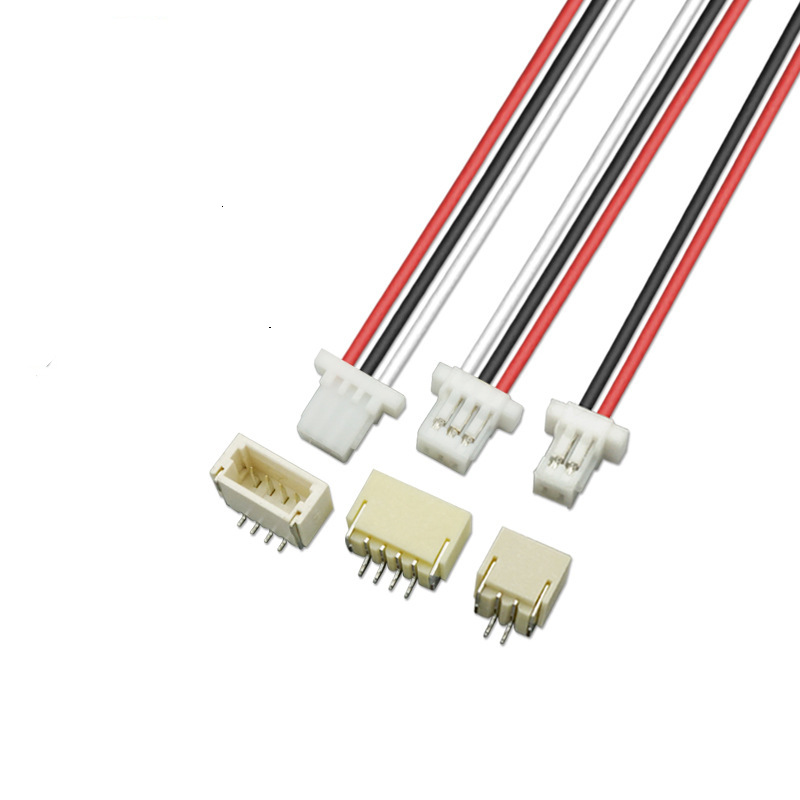
An SH1.0mm wire-to-board wire harness is a compact cable assembly designed to connect wires to a PCB or other board-level connector using a suitable SH-series connector configuration.
2. Why is connector crimping quality important?
Crimping directly affects mechanical retention and electrical contact performance. Inconsistent crimping can increase the risk of loose terminals, unstable contact, conductor damage, and intermittent electrical connections.
3. How can buyers verify crimp quality?
Buyers can ask suppliers about crimp-height control, terminal pull-force testing, visual inspection, tooling management, continuity testing, and production records.
4. Does a good-looking crimp guarantee reliable performance?
No. Visual inspection is useful but cannot replace appropriate dimensional, mechanical, and electrical testing.
5. Can SH1.0mm wire harnesses be customized?
Yes. Depending on the selected connector and terminal system, harnesses can be customized according to wire length, circuit count, connector configuration, wire specification, pin definition, and application requirements.
6. What information is needed for an SH1.0mm wire harness quotation?
A connector model, wire specification, circuit count, wire length, pin definition, quantity, application requirements, and technical drawing or sample are highly useful for accurate evaluation.
Conclusion
Consistent connector crimping is one of the key indicators separating a professional wire harness manufacturer from a simple assembly supplier.
For SH1.0mm wire to board wire harnesses, reliable production requires the coordinated control of wire preparation, terminal selection, crimping tooling, crimp parameters, first-piece inspection, mechanical testing, electrical testing, and final quality inspection.
When evaluating a supplier, do not ask only:
“How much does the wire harness cost?”
Ask instead:
“How does your factory guarantee that the 1st harness, 1,000th harness, and 100,000th harness meet the same approved requirements?”
That is the more meaningful question for long-term OEM and electronics manufacturing supply.
Xiamen Evershine is ready to support customized wire and cable, wire harness, and cable assembly requirements with application-focused manufacturing solutions.