

Growing Demand for Custom-Built Automotive Connector Wiring Harnesses for Special & Aftermarket Vehicles
2026-08-26 10:35Why are more special-vehicle manufacturers, aftermarket brands, and automotive electronics integrators turning to custom-built wiring harnesses?
As vehicle electrification, onboard electronics, ADAS accessories, telematics, auxiliary control systems, and vehicle modifications continue to expand, a standard wiring harness is increasingly unable to satisfy every application.
A modified vehicle may require a different connector combination. An engineering vehicle may need longer cable routing and higher vibration resistance. A special-purpose vehicle may require additional electronic equipment in locations never considered in the original vehicle wiring architecture.
This is creating growing demand for the custom-built automotive wiring harness.
For aftermarket vehicle manufacturers, specialty vehicle builders, and automotive electronics integrators, the harness is no longer just a passive collection of wires. It is becoming an engineered connection system that must match the vehicle's electrical architecture, installation environment, connector interfaces, and functional requirements.
Evershine provides customized wire, cable, and wiring harness manufacturing services, supporting projects from technical evaluation and prototyping to batch production.
1. What Is a Custom-Built Automotive Wiring Harness?
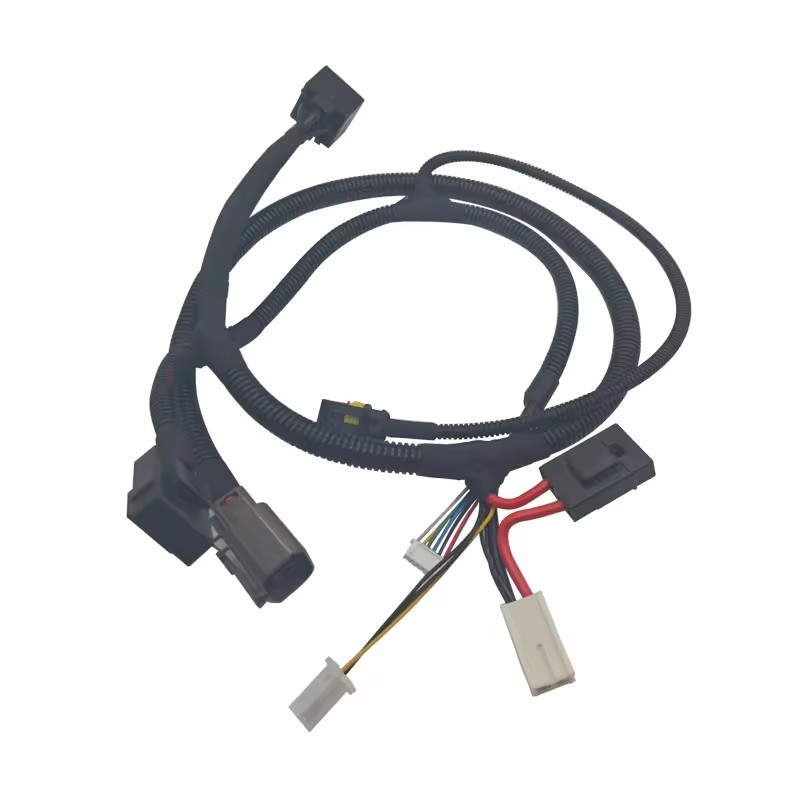
A custom-built automotive wiring harness is an electrical assembly manufactured according to a specific vehicle, equipment, or electronic-system requirement rather than a standardized vehicle configuration.
A finished harness can combine:
Automotive wires
Multi-core or single-core cables
Automotive connectors
Terminals
Seals
Protective sleeves
Heat-shrink tubing
Branches
Clips or fixing components
Labels and identification
Customized connector combinations
The assembly can be engineered according to:
Wiring diagrams
Vehicle architecture
Connector part numbers
Installation dimensions
Cable routing
Electrical specifications
Environmental requirements
Customer samples
The basic difference is straightforward:
Standard harness = designed for a predefined vehicle configuration
Custom harness = designed around a specific vehicle or equipment requirement
This distinction becomes particularly important when the vehicle is modified after the original factory configuration.
2. Why Standard Automotive Harnesses Are Not Always Enough
Traditional OEM vehicles are generally designed around a relatively fixed electrical architecture.
However, aftermarket and special-purpose vehicles frequently add or relocate electronic equipment.
For example, a modified vehicle may add:
Cameras
Radar-related accessories
Displays
Auxiliary lighting
GPS modules
Communication equipment
Additional sensors
Warning systems
Control modules
Power distribution equipment
The original wiring harness may not have the correct:
Connector interface
Wire length
Branch location
Pin configuration
Terminal arrangement
Protection method
Installation path
Trying to modify an existing standard harness manually can introduce additional risks.
The result is a growing need for an aftermarket vehicle connector harness designed specifically for the modified configuration.
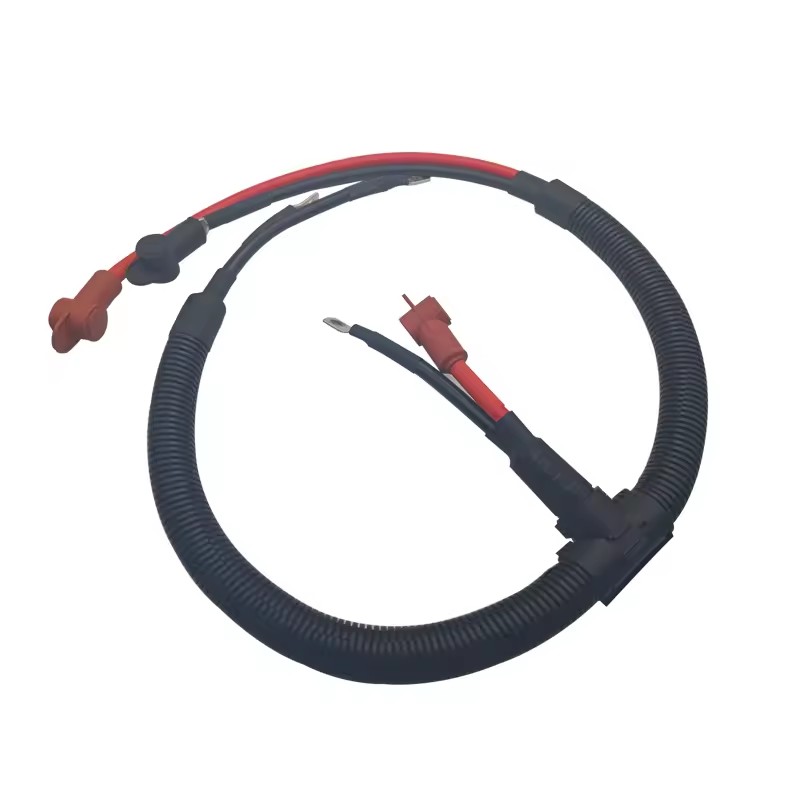
3. Market Application: Aftermarket Vehicle Modifications
The aftermarket vehicle sector is one of the clearest application areas for custom harnesses.
Modification projects often require additional electrical equipment without completely redesigning the original vehicle.
Examples include:
Auxiliary lighting
Additional work lights, warning lights, or specialty lighting systems may require dedicated wiring and connectors.
Communication equipment
Radio, communication, tracking, and fleet-management systems can require customized connection points.
Camera systems
Front, rear, side, or specialty cameras may require customized cable lengths and connector arrangements.
Vehicle control equipment
Additional controllers or auxiliary electrical systems may require dedicated wiring interfaces.
In these applications, the harness needs to fit the modified installation rather than the original vehicle alone.
4. Market Application: Engineering and Special-Purpose Vehicles
Engineering vehicles often operate in environments that are considerably more demanding than ordinary road vehicles.
Examples include:
Construction equipment
Utility vehicles
Agricultural machinery
Maintenance vehicles
Emergency vehicles
Mining-related vehicles
Special-purpose transport equipment
These applications may expose wiring harnesses to:
Continuous vibration
Mechanical shock
Dust
Moisture
Temperature changes
Oil or other contaminants
Limited installation space
Therefore, special vehicle cable components must be selected according to the actual working environment.
A harness designed for a protected cabin may not be suitable for an exposed installation near moving mechanical equipment.
5. Market Application: ADAS and Onboard Electronic Accessories
ADAS-related technology and onboard electronic accessories are also increasing the number of electrical interfaces inside vehicles.
Depending on the system architecture, equipment may include:
Cameras
Sensors
Displays
Controllers
Communication modules
Monitoring systems
Warning systems
When these components are integrated into existing vehicles, the wiring system may require customized:
Cable lengths
Connector interfaces
Pin configurations
Branch structures
Protective components
Installation routes
This makes a custom automotive cable assembly particularly useful for projects where standard cable products cannot directly match the customer's system.
6. The First Challenge: Connector Interface Compatibility
Connector compatibility is often the first technical issue that must be solved.
A harness supplier needs to verify more than the connector's appearance.
Important parameters include:
Connector manufacturer
Exact part number
Number of positions
Terminal type
Pitch
Locking mechanism
Keying
Mating interface
Wire size compatibility
Sealing requirements
Electrical ratings
A connector that looks similar may still have a different terminal structure or pin arrangement.
Therefore, aftermarket and specialty-vehicle projects should provide:
Connector part number + drawing + sample + mating component information
whenever possible.
Evershine's approach
Evershine can evaluate customer drawings, samples, BOMs, connector specifications, and wiring diagrams before prototype production.
This helps identify connector compatibility issues before the project enters mass production.
7. The Second Challenge: Vibration Resistance
Vibration is a major consideration for engineering and special-purpose vehicles.
A harness may be exposed to repeated mechanical movement caused by:
Engines
Motors
Road conditions
Hydraulic systems
Moving machinery
Equipment vibration
Poorly routed cables can experience:
Insulation wear
Terminal loosening
Connector disengagement
Conductor fatigue
Intermittent electrical faults
For this reason, a custom harness should be evaluated as a complete mechanical system.
Important design considerations include:
Cable flexibility
Strain relief
Branch position
Protective sleeving
Connector locking
Fixing points
Routing clearance
Bend radius
The correct design depends on the specific vehicle and installation environment.
8. The Third Challenge: EMI and Electromagnetic Compatibility
As vehicles contain more electronic devices, electromagnetic compatibility becomes increasingly important.
High-current circuits, motors, switching devices, communication systems, sensors, and signal cables may coexist within limited installation spaces.
Poor cable routing can potentially increase the risk of electromagnetic interference.
Depending on the application, harness design may therefore consider:
Signal and power cable separation
Shielded cable requirements
Grounding strategy
Connector shielding
Cable routing
Twisted-pair configurations where appropriate
Protective structures
For sensitive signal applications, the harness should be designed together with the overall electrical system rather than treated as an isolated component.
Procurement question
Instead of simply asking:
"Can you make the cable?"
ask:
"Can you manufacture the harness according to our EMI, routing, connector, and electrical requirements?"
That distinction matters for automotive electronics projects.
9. Technical Parameters Buyers Should Define
A clear technical specification reduces prototype revisions.
For a custom-built automotive wiring harness, buyers should define:
| Parameter | Recommended Information |
|---|---|
| Harness type | Automotive / specialty vehicle harness |
| Wire | Type, core count, conductor size |
| Voltage | Working voltage |
| Temperature | Required operating range |
| Connector | Manufacturer + exact part number |
| Terminal | Terminal model |
| Pinout | Pin assignment |
| Length | Overall length and tolerance |
| Branches | Number and position |
| Routing | Installation requirements |
| Protection | Sleeve, conduit, tubing, etc. |
| Sealing | Seal/gasket requirements |
| EMI | Shielding or routing requirements |
| Crimping | Required terminal process |
| Testing | Continuity / short / pull-force etc. |
| Compliance | Applicable customer/regulatory requirements |
| Quantity | Prototype / pilot / mass production |
The drawing should also indicate connector orientation and branch dimensions whenever these affect installation.
10. Why Customization Can Reduce Installation Problems
Consider two approaches.
Option A — Modify standard wiring manually
Standard harness → cut → extend → splice → add connector → insulate → test
Every additional manual operation introduces another potential failure point.
Option B — Use a custom harness
Vehicle requirements → engineering design → prototype → validation → finished harness
The second approach moves more of the repetitive preparation work into a controlled manufacturing environment.
For repeated production, this can improve:
Wiring consistency
Installation efficiency
Documentation accuracy
Material control
Quality repeatability
The goal is not simply to make a "special wire."
The goal is to create a repeatable wiring solution for a specific vehicle platform or equipment configuration.
11. Procurement Pain Point: Can the Supplier Handle Small and Large Orders?
Special vehicle and aftermarket projects often have unusual order patterns.
A typical project may progress through:
Prototype → 10–50 pcs validation → Pilot production → Hundreds or thousands of units
A supplier that only supports high-volume orders may not be suitable during the development stage.
For project-based customers, production flexibility matters.
The supplier should ideally support:
Prototype quantities
Small-batch trial orders
Pilot production
Recurring orders
Large-volume production
This is one area where a factory-direct supplier can offer practical advantages.
12. Procurement Pain Point: How Long Does Sample Development Take?
For aftermarket and special-vehicle projects, prototype speed can directly influence product launch schedules.
A typical sample development workflow involves:
Drawing review
↓
Connector and wire confirmation
↓
Material preparation
↓
Prototype assembly
↓
Electrical/mechanical inspection
↓
Customer installation test
↓
Modification if required
↓
Final sample approval
The actual lead time depends on connector availability, harness complexity, tooling, sample quantity, and testing requirements.
Therefore, buyers should ask for a project-specific sample schedule rather than relying on a generic supplier lead time.
13. Procurement Pain Point: Can the Factory Maintain Batch Consistency?
The prototype is only the beginning.
For a successful production project, the supplier must reproduce the approved harness consistently.
Important production controls can include:
Incoming inspection
Wire, connectors, terminals, seals, and other materials are checked against specifications.
Process control
Crimping, stripping, assembly, routing, and connector insertion are controlled.
Electrical testing
Depending on the product requirements:
Continuity testing
Short-circuit testing
Pinout verification
Resistance testing where applicable
Mechanical inspection
Terminal retention
Crimp condition
Connector locking
Dimensional verification
Final inspection
Harness length
Branch position
Connector orientation
Appearance
Labeling
Packaging
The objective is simple:
Approved sample = mass-production standard
14. Data Evidence: How Should Buyers Measure Supplier Performance?
Rather than relying on broad statements such as "high-quality automotive harness," procurement teams can use measurable indicators.
Engineering KPIs
Drawing review accuracy
Sample revision count
Prototype approval cycle
Production KPIs
First-pass yield
Defect rate
Rework rate
On-time delivery
Batch consistency
Electrical KPIs
Continuity pass rate
Pinout accuracy
Short-circuit detection
Mechanical KPIs
Terminal pull-force results
Crimp inspection results
Connector locking verification
These indicators allow buyers to compare suppliers using objective production data.
15. Evershine: From Harness Concept to Production
For customers looking for a custom automotive cable assembly, Evershine provides an integrated development and manufacturing route.
The company specializes in wire, cable, and wiring harness R&D, manufacturing, and supply.
For special-vehicle and aftermarket projects, Evershine can work from:
Customer drawings
Samples
Wiring diagrams
BOMs
Connector part numbers
Technical specifications
Installation requirements
The project can move through:
1. Solution Evaluation
Evershine reviews the customer's requirements and identifies key wire, connector, terminal, sealing, and routing parameters.
2. Prototype Development
A customized sample is produced for mechanical and electrical validation.
3. Customer Testing
The customer can verify connector mating, installation dimensions, routing, electrical performance, and other application requirements.
4. Process Optimization
Feedback from prototype testing is incorporated into the production specification.
5. Batch Manufacturing
The approved design is transferred to controlled production.
6. Final Inspection
Finished harnesses are inspected according to the agreed quality and testing requirements.
This provides customers with a single supply chain from engineering evaluation to mass production.
16. Why Factory-Direct Custom Harness Supply Matters
For special vehicle and aftermarket projects, communication between engineering and manufacturing is critical.
A factory-direct supplier can potentially shorten the communication chain between:
Customer engineering team ↔ Supplier engineering team ↔ Production team
This is useful when customers need to modify:
Wire length
Connector type
Pin configuration
Branch position
Protective components
Terminal specification
Packaging
Production quantity
Instead of treating every modification as a completely new procurement project, an experienced custom harness manufacturer can incorporate approved engineering changes into the production process.
17. A Practical RFQ Checklist for Special Vehicle Harnesses
Before requesting a quotation, prepare:
Vehicle/equipment application
Wiring diagram
Harness drawing
Connector part numbers
Terminal specifications
Wire type and size
Cable length
Branch positions
Connector orientation
Operating temperature
Vibration requirements
Environmental exposure
Sealing/IP requirements where applicable
EMI/EMC requirements
Electrical testing requirements
Mechanical testing requirements
Compliance requirements
Prototype quantity
Estimated annual volume
Required sample date
Providing this information can help the supplier evaluate the project more accurately and reduce unnecessary quotation and sample revisions.
18. When Is a Custom Harness Better Than a Standard Harness?
A customized solution is particularly valuable when:
The vehicle has been modified
The original OEM harness no longer matches the new electrical architecture.
New electronic equipment is being added
Additional cameras, sensors, controllers, or communication devices require new interfaces.
Installation space is restricted
Customized routing and cable length are required.
The operating environment is harsh
Vibration, temperature, moisture, dust, or mechanical movement requires application-specific protection.
The project is produced repeatedly
A standardized custom harness can be reproduced across multiple units.
Connector combinations are unique
The required connector and terminal configuration is not available as a standard off-the-shelf product.
19. The Broader 2026 Trend: Harnesses Are Becoming Engineered Components
The growing demand for custom wiring harnesses reflects a broader shift in automotive manufacturing.
Previously, wiring could be viewed primarily as a collection of basic electrical components.
Today, the harness increasingly needs to integrate:
Electrical performance + mechanical protection + connector compatibility + environmental resistance + EMC considerations + manufacturing consistency
This is particularly apparent in:
Aftermarket vehicles
Specialty vehicles
Engineering equipment
Vehicle electronics
ADAS accessories
Fleet modification projects
As electronic systems become more customized, the demand for special vehicle cable components and application-specific harness assemblies is likely to remain strong.
20. From Project Requirements to a Production-Ready Custom Harness
For aftermarket brands, specialty vehicle manufacturers, and automotive electronics integrators, the most important sourcing question is not simply:
"Who can manufacture a wiring harness?"
It is:
"Who can convert our vehicle-specific electrical requirements into a repeatable production-ready harness?"
The right supplier should be able to evaluate:
Connector compatibility → wire specification → vibration environment → sealing → EMI/EMC requirements → crimping → electrical testing → prototype → mass-production consistency
This is where Evershine can support customers.
Whether you need an aftermarket vehicle connector harness, special vehicle cable components, or a complete custom automotive cable assembly, Evershine can work from drawings, samples, BOMs, and technical specifications to develop the required solution.
From solution evaluation and prototype development to small-batch trial orders and large-scale production, Evershine provides factory-direct customized wire, cable, and harness manufacturing support.
Ready to Develop Your Custom Vehicle Harness?
Send Evershine your:
Drawing + connector part number + wire specification + sample/BOM + application environment + required quantity
The engineering team can evaluate your requirements and help move the project from concept → prototype → validation → stable production.
Evershine — Custom Wire, Cable & Automotive Wiring Harness Solutions for Special Vehicles, Aftermarket Applications and Automotive Electronics.