

What to Evaluate When Sourcing Custom Automotive Connector Wiring Harness in 2026
2026-08-12 10:35For automotive component buyers, specialty vehicle manufacturers, and Tier 2 suppliers, sourcing a custom wiring harness is no longer just about selecting the right connector and wire. As vehicle electronics become more integrated, a reliable harness must simultaneously meet requirements for electrical performance, connector compatibility, vibration resistance, temperature resistance, sealing, crimping quality, traceability, and regulatory compliance.
For projects involving specialty vehicles, modified vehicles, onboard electronics, control systems, and other vehicle electrical applications, choosing the right automotive cable assembly supplier at the engineering stage can significantly reduce later problems such as connector mismatch, intermittent electrical faults, water ingress, terminal pull-out, and inconsistent mass production.
This guide explains the key points buyers should evaluate when sourcing a custom automotive connector wiring harness in 2026 and how Evershine can support projects from drawings and samples through validation and batch production.
1. What Is a Custom Automotive Connector Wiring Harness?
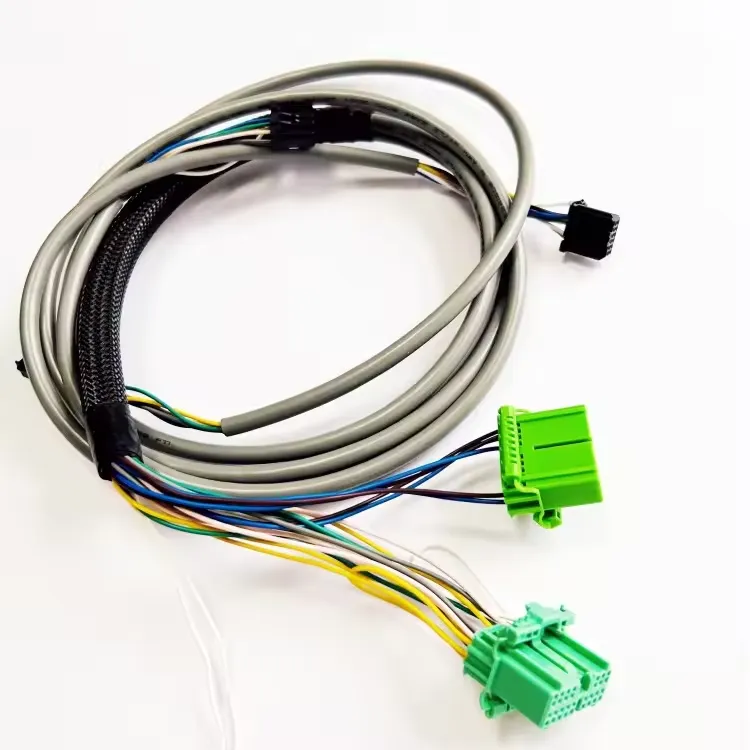
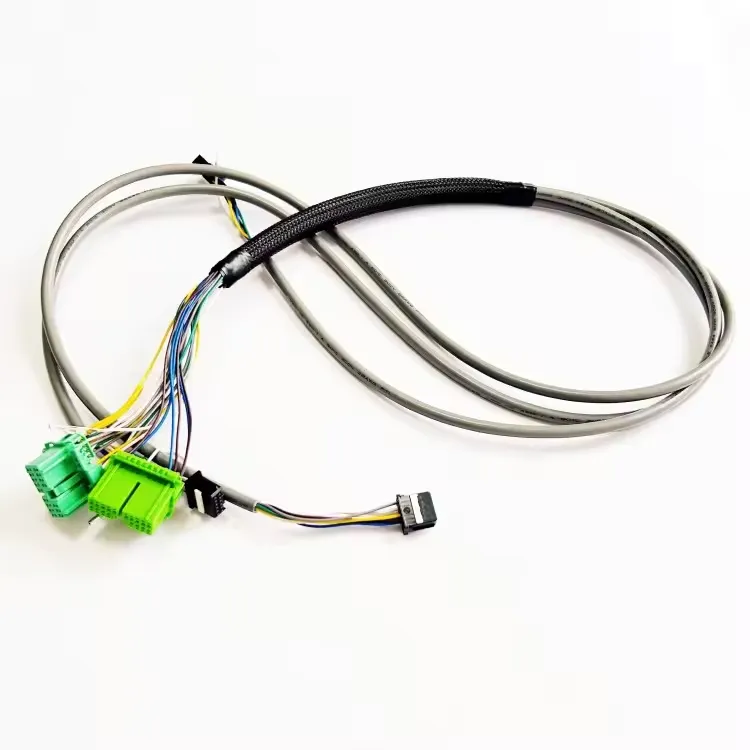
A custom automotive connector wiring harness is a pre-engineered electrical assembly that combines wires, terminals, connectors, protective components, and other cable components into a specified configuration for a vehicle or automotive electronic system.
Unlike a standard cable purchased off the shelf, a custom harness is manufactured according to the customer's:
Electrical schematic
Wiring diagram
Connector specification
Wire specification
Terminal requirements
Branch configuration
Cable length
Installation environment
Mechanical constraints
Testing requirements
A typical automotive wiring harness assembly may include:
Automotive-grade wires
Multi-core or single-core cables
Connectors
Crimp terminals
Seals and gaskets
Protective sleeves
Heat-shrink tubing
Clips or fixing components
Identification labels
Customized branch structures
The finished harness is designed to provide a repeatable connection between sensors, controllers, switches, actuators, displays, power systems, and other electrical components.
For OEM and B2B buyers, the objective is not simply to make electricity flow.
It is to create a stable, correctly matched, mechanically secure, environmentally suitable, and repeatable electrical connection.
2. Why Automotive Harness Sourcing Is Becoming More Technical in 2026
Vehicle electrical systems are becoming increasingly complex.
Specialty vehicles, modified vehicles, commercial vehicles, industrial vehicles, and onboard electronic systems may integrate:
Cameras
Sensors
Controllers
GPS and telematics
Lighting systems
Displays
Communication modules
Power management systems
Safety equipment
Auxiliary electrical devices
As the number of electronic components increases, the wiring harness becomes an increasingly important part of the system.
For procurement teams, this means that a low-cost harness with an incompatible connector or inadequate environmental protection can create much higher downstream costs.
A better sourcing strategy evaluates the complete assembly:
Connector + terminal + wire + crimp + sealing + mechanical protection + testing + compliance + production consistency
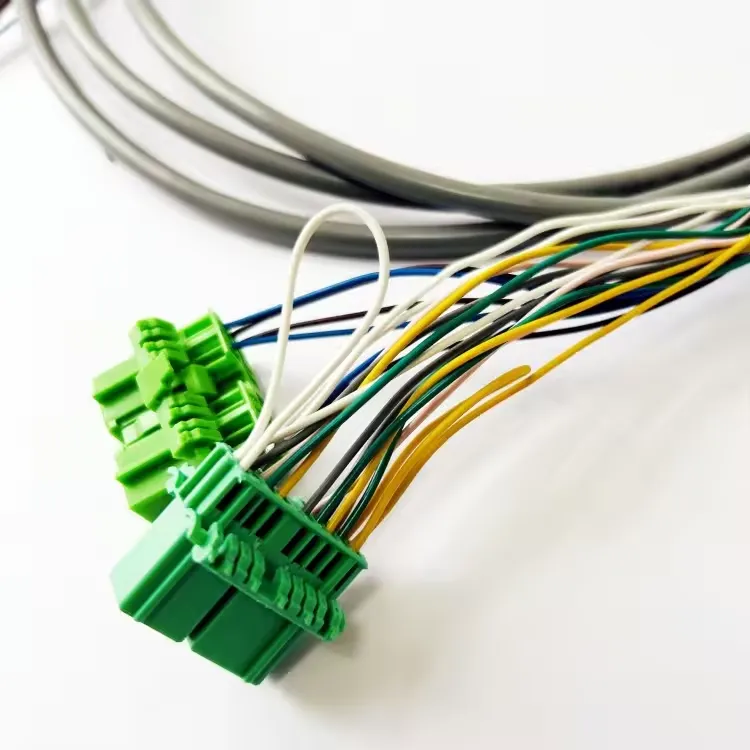
3. Application Scenarios for Custom Vehicle Connector Harnesses
Specialty Vehicles
Special-purpose vehicles may use customized electronic systems that differ significantly from standard passenger vehicles.
A custom vehicle connector harness can be designed around the actual electrical architecture of the vehicle.
Typical applications include:
Emergency and service vehicles
Utility vehicles
Industrial vehicles
Engineering vehicles
Recreational vehicles
Modified commercial vehicles
Fleet-specific electronic systems
The harness may need customized lengths, connector combinations, branch points, protective sleeving, and terminal configurations.
Modified Vehicles
Vehicle modification projects frequently introduce additional electrical equipment.
For example:
Vehicle control module → custom wiring harness → auxiliary electronic device
or:
Power distribution → automotive cable assembly → lighting/control equipment
The challenge is ensuring that the added harness integrates correctly with the existing electrical architecture.
Connector compatibility and electrical specifications therefore need to be confirmed before production.
Onboard Electronics
Modern onboard electronic systems can require multiple connectors and signal paths within a limited installation space.
A customized harness can help manage:
Power connections
Signal connections
Sensor wiring
Communication wiring
Control circuits
Instead of purchasing individual wires and assembling them manually, the finished harness can be supplied according to the equipment's wiring diagram.
4. First Evaluation Point: Connector Compatibility
For a custom harness project, connector compatibility should be confirmed before discussing price.
A connector is not simply defined by its external shape.
Buyers should verify:
Connector series
Part number
Number of positions
Terminal type
Pitch
Mating configuration
Locking mechanism
Keying
Wire size range
Terminal plating
Sealing structure
Mating connector
For projects using components from established connector manufacturers, buyers may specify the required connector series or part number.
Evershine can support custom harness development based on customer drawings, samples, connector specifications, and project requirements, including applications involving mainstream connector systems such as JST and Molex, subject to exact model and specification confirmation.
Important sourcing rule
Never approve a connector based only on a product photograph.
Two connectors can look similar while having different terminal structures, pin assignments, mating interfaces, or electrical ratings.
For engineering projects, the connector part number and technical drawing should be treated as the primary reference.
5. Second Evaluation Point: Wire Temperature and Vibration Resistance
Automotive wiring operates in environments that can involve significantly more mechanical and thermal stress than ordinary indoor electrical equipment.
Depending on the installation location, the harness may experience:
Engine or motor heat
Temperature cycling
Continuous vibration
Mechanical movement
Friction
Moisture
Dust
Oil or other contaminants
Therefore, buyers should define the required:
Conductor size
Voltage rating
Temperature rating
Insulation material
Flexibility
Abrasion resistance
Chemical/environmental resistance
A wire suitable for a protected passenger-compartment application may not automatically be suitable for a high-temperature or high-vibration installation.
The correct question is not:
"Is this automotive wire?"
It is:
"Is this wire suitable for this specific installation environment?"
6. Third Evaluation Point: IP Protection and Sealing
Water and contamination can create serious problems for vehicle electrical systems.
If a connector is installed in an exposed or harsh environment, the harness design may require:
Connector seals
Terminal seals
Gaskets
Waterproof boots
Heat-shrink protection
Protective tubing
Proper strain relief
The required IP protection level should be determined according to the actual installation environment and applicable product specification.
For example, a harness located inside a protected cabin may have different protection requirements from one installed near a wheel area or exposed equipment compartment.
Procurement tip
Do not simply ask a supplier:
"Is the harness waterproof?"
Instead, specify:
Required protection level + test method + installation environment + connector sealing requirements.
This creates an objectively verifiable specification.
7. Fourth Evaluation Point: Crimping Quality
The electrical connection between the wire and terminal is one of the most critical parts of an automotive wiring harness assembly.
An improperly crimped terminal can potentially cause:
Increased electrical resistance
Intermittent connections
Terminal pull-out
Localized heating
Signal instability
Equipment failure
A professional harness manufacturer should control important crimping variables such as:
Terminal and wire compatibility
Strip length
Conductor insertion
Crimp geometry
Crimp height
Tooling condition
Terminal positioning
Pull-force performance
For automotive-related applications, automated or controlled crimping processes can help improve production repeatability.
However, automation alone does not guarantee quality.
The more important question is:
Does the manufacturer have defined crimping parameters and inspection criteria?
8. Automated Crimping and Inspection: What Buyers Should Ask
When evaluating an automotive cable assembly supplier, procurement engineers should ask how the manufacturer verifies crimp quality.
Depending on the product requirements, the production process may include:
Crimping process control
Dedicated applicators and controlled tooling help maintain consistent terminal deformation.
Crimp-height verification
Crimp dimensions can be monitored against the approved production specification.
Pull-force testing
Samples or defined production intervals can be tested to verify mechanical retention.
Electrical testing
Harnesses can be checked for:
Continuity
Short circuit
Incorrect wiring
Pin-to-pin connection
Other agreed electrical parameters
Visual inspection
Operators or inspection systems can verify:
Terminal position
Connector assembly
Wire damage
Sealing components
Locking condition
Labeling
For high-volume orders, buyers should ask whether inspection records can be associated with production batches.
9. Fifth Evaluation Point: IATF 16949 and RoHS Compliance
Compliance requirements should be discussed during supplier qualification rather than after the product has entered production.
For automotive supply chains, IATF 16949 is an important quality-management framework associated with automotive production and relevant customer requirements.
However, buyers should distinguish between:
"The supplier follows automotive-style quality requirements"
and
"The supplier holds a specific certification."
Do not assume certification status without verifying the supplier's current documentation.
Similarly, RoHS requirements may apply depending on the product, market, customer specification, and regulatory scope.
For international projects, buyers may request:
RoHS documentation
Material declarations
Component specifications
Compliance statements
Quality-system certificates
Test reports
Traceability documentation
Procurement recommendation
Include compliance requirements directly in the RFQ.
This avoids a situation where the harness passes functional testing but cannot be accepted because the required documentation is missing.
10. Technical Parameters Buyers Should Define
A good RFQ for a custom cable components project should contain enough information for the manufacturer to reproduce the assembly accurately.
| Parameter | What Buyers Should Specify |
|---|---|
| Harness type | Automotive connector wiring harness |
| Wire | Core count and wire type |
| Conductor | Material and cross-sectional area |
| Temperature | Required operating range |
| Connector | Manufacturer + exact part number |
| Terminal | Terminal model |
| Pin configuration | Pin assignment |
| Wire length | Finished length and tolerance |
| Branches | Branch position and dimensions |
| Sealing | Seal/gasket requirements |
| Protection | Sleeve, tubing, conduit, etc. |
| Crimping | Required process/specification |
| Testing | Continuity, short, pull-force, etc. |
| Compliance | RoHS / applicable requirements |
| Quantity | Prototype / pilot / mass production |
| Drawing | 2D/3D drawing or sample |
| Packaging | Customer requirements |
The more complete the engineering input, the faster the supplier can move from quotation to sample validation.
11. Procurement Pain Point: Can the Supplier Convert My Drawing Correctly?
This is often overlooked.
A supplier may be able to manufacture wiring harnesses but still struggle to interpret an engineering drawing accurately.
For custom automotive harness projects, drawing conversion capability is critical.
The manufacturer needs to understand:
Wire routing
Pin assignments
Connector orientation
Branch positions
Terminal specifications
Wire lengths
Tolerances
Sealing requirements
Identification marks
The customer should therefore evaluate not only the factory's production equipment but also its engineering communication process.
A practical workflow is:
Customer drawing → Technical review → Specification confirmation → Sample → Customer validation → Production
This creates a controlled transition from engineering data to manufacturing.
12. Procurement Pain Point: How Fast Can Samples Be Delivered?
For new vehicle electronics projects, waiting too long for a prototype harness can delay the entire validation process.
Before placing an order, ask the supplier to clarify:
Drawing review time
Material preparation time
Connector availability
Sample production time
Testing time
Sample shipment schedule
Mass-production lead time
Sample delivery depends heavily on connector availability, tooling, quantity, customization complexity, and customer requirements.
Therefore, an experienced supplier should provide a project-specific lead-time assessment rather than promising the same generic delivery period for every harness.
13. Procurement Pain Point: Will the First Sample Match Mass Production?
This is a critical question for B2B buyers.
A successful prototype does not automatically mean successful mass production.
Production consistency should be controlled through:
Approved BOM
Approved drawing
Controlled material specifications
Standardized crimp parameters
Process inspection
Electrical testing
Mechanical testing
Final inspection
Batch traceability where required
The goal is to ensure that:
Sample specification = Production specification
and:
Production batch A ≈ Production batch B
For customers ordering thousands of harnesses, batch-to-batch consistency can be more important than achieving the lowest initial sample price.
14. Data Evidence: Measure Harness Quality With Objective KPIs
Instead of evaluating a supplier only through claims such as "high quality," procurement engineers can request measurable quality indicators.
Useful KPIs include:
Electrical
Continuity pass rate
Short-circuit detection
Pin-to-pin accuracy
Resistance where applicable
Mechanical
Terminal pull-force performance
Crimp dimensions
Connector locking condition
Dimensional
Finished harness length
Branch position
Strip length
Connector orientation
Production
First-pass yield
Rework rate
Defect rate
On-time delivery
Batch consistency
Documentation
Drawing revision control
BOM control
Inspection records
Material documentation
Compliance documentation
These indicators help turn supplier evaluation from a subjective conversation into a measurable procurement decision.
15. How Evershine Supports Custom Automotive Connector Harness Projects
Evershine specializes in the development, manufacturing, and supply of wires, cables, and wiring harness products for customized applications.
For automotive-related and specialty-vehicle projects, Evershine can work from:
Customer drawings
Samples
Wiring diagrams
BOMs
Connector specifications
Terminal specifications
Prototype requirements
The production team can support customized configurations involving:
Wire length
Wire specifications
Connector selection
Terminal configuration
Branch structure
Protective components
Crimping requirements
Electrical testing
Mechanical testing
For connector-based projects, Evershine can adapt harness designs to specified mainstream connector systems such as JST, Molex, and other customer-specified connector platforms, subject to exact part-number confirmation and availability.
The emphasis is on converting the customer's engineering requirements into a repeatable manufactured assembly.
16. Evershine's Sample-to-Mass-Production Workflow
For a new custom vehicle connector harness, a structured development process can reduce engineering misunderstandings.
Step 1 — Customer submits drawing or sample
The customer provides the wiring diagram, harness sample, BOM, connector part numbers, or other technical information.
Step 2 — Engineering review
The specifications are reviewed for:
Connector compatibility
Wire selection
Terminal matching
Length
Branch configuration
Crimping requirements
Testing requirements
Step 3 — Sample production
A prototype harness is produced according to the approved specifications.
Step 4 — Customer validation
The customer checks:
Mechanical fit
Connector mating
Electrical performance
Installation routing
Environmental requirements
Step 5 — Process confirmation
Once the sample is approved, production parameters are established for repeat manufacturing.
Step 6 — Batch production
The approved specification is transferred into controlled mass production.
Step 7 — Testing and final inspection
Electrical and mechanical checks are performed according to the agreed inspection requirements.
This process helps bridge the gap between prototype development and stable OEM supply.
17. When Should You Choose a Custom Automotive Wiring Harness?
A customized harness is particularly suitable when:
Your connector configuration is non-standard
You need specific connectors, terminals, pin assignments, or branch structures.
Your installation space is limited
Custom lengths and routing can reduce unnecessary wire loops.
You need repeated production
A standardized harness can be reproduced for multiple vehicle units.
You are developing specialty vehicles
The electrical architecture may differ from standard passenger vehicles.
You are adding onboard electronic equipment
Customized harnesses can integrate additional sensors, controllers, displays, or auxiliary systems.
You need traceable quality
A controlled supplier can establish defined production and inspection procedures.
18. How to Compare Automotive Cable Assembly Suppliers
When comparing suppliers, avoid evaluating only:
Unit price + MOQ
A better supplier evaluation matrix includes:
| Evaluation Area | Key Question |
|---|---|
| Engineering | Can they interpret our drawings? |
| Connector | Can they match exact part numbers? |
| Materials | Are wire and terminal specifications controlled? |
| Crimping | How is crimp quality verified? |
| Testing | What electrical and mechanical tests are available? |
| Compliance | Can required documentation be supplied? |
| Sampling | What is the project-specific sample lead time? |
| Production | Can they support pilot and mass production? |
| Quality | How is batch consistency controlled? |
| Communication | Can engineering questions be resolved directly? |
This approach helps procurement teams identify suppliers that can support the entire product lifecycle rather than only one purchase order.
19. 2026 Sourcing Checklist for Custom Automotive Connector Wiring Harnesses
Before approving a supplier, verify these points:
Exact connector manufacturer and part number confirmed
Terminal model confirmed
Pin assignment verified
Wire type and cross-sectional area specified
Temperature requirement defined
Vibration/environmental requirements defined
Sealing and IP requirements defined where applicable
Crimping process confirmed
Pull-force testing requirements confirmed
Electrical testing requirements confirmed
RoHS requirements confirmed
IATF 16949/customer quality requirements clarified
Engineering drawing revision controlled
Sample lead time confirmed
Mass-production lead time confirmed
Batch consistency controls reviewed
Inspection documentation requirements confirmed
20. From Connector Selection to a Production-Ready Harness
A reliable automotive wiring harness assembly is the result of multiple engineering decisions working together.
The connector must fit.
The terminal must match the wire.
The wire must withstand the intended environment.
The crimp must provide stable electrical and mechanical performance.
The sealing system must match the installation conditions.
The finished harness must pass the agreed tests.
And the manufacturer must be able to reproduce the same specification consistently.
That is why selecting an automotive cable assembly supplier should be treated as an engineering and supply-chain decision rather than simply a price comparison.
For specialty vehicle manufacturers, Tier 2 suppliers, automotive electronics companies, and system integrators, Evershine provides a practical route from customer drawing or sample to customized harness production.
Whether you need a custom automotive connector wiring harness, custom cable components, or a complete automotive wiring harness assembly, Evershine can evaluate your connector, wire, terminal, length, testing, and production requirements.
Send your drawing, sample, BOM, or connector part number to Evershine for project evaluation and sample development.
Evershine Custom Harness Service
Drawing / Sample → Engineering Review → Connector & Wire Matching → Prototype → Electrical & Mechanical Testing → Customer Approval → Batch Production → Final Inspection
Evershine — Custom Wire, Cable and Automotive Wiring Harness Solutions for OEM and Specialty Vehicle Applications.