


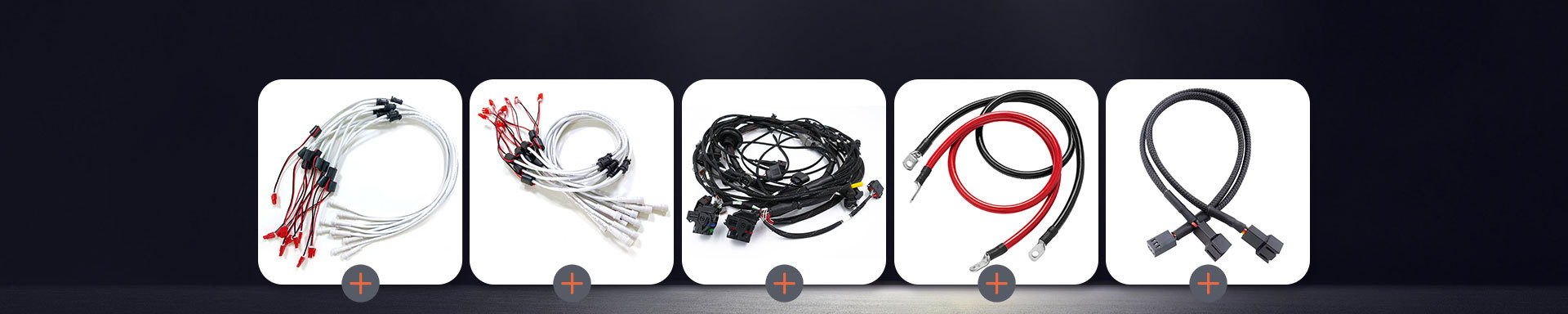
Key Points for Sourcing Custom PVC-Insulated Fork Terminal Single-Core Cable Assemblies in 2026
2026-08-19 10:46For equipment manufacturers, electrical engineers, sourcing managers, and system integrators, choosing a reliable cable assembly supplier is no longer simply a matter of comparing wire prices. In 2026, procurement teams increasingly need to evaluate conductor quality, insulation performance, terminal compatibility, crimping reliability, regulatory compliance, production consistency, and delivery capability as one complete system.
For applications such as control cabinets, industrial equipment, automation systems, battery and energy equipment, and electrical distribution assemblies, a properly manufactured fork terminal cable assembly can reduce installation time while improving connection consistency.
This guide explains the key technical and purchasing considerations when sourcing a single core PVC insulated copper wire with customized fork terminals, and how an experienced manufacturer such as Evershine can support drawing-based customization, rapid sampling, mass production, and inspection.
1. What Is a Custom PVC-Insulated Fork Terminal Cable Assembly?
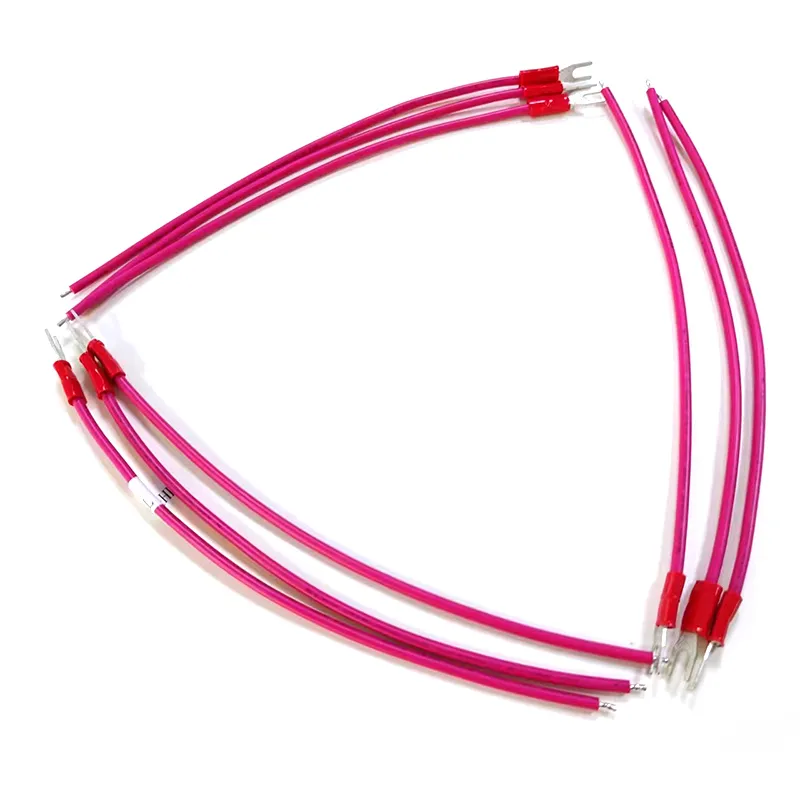
A fork terminal cable assembly is a pre-assembled electrical connection consisting primarily of a single-core insulated wire and a fork-type terminal that has been mechanically crimped onto one or both ends.
Unlike loose wire and separately supplied terminals, a pre-crimped fork terminal wire arrives ready for installation. The operator can place the fork terminal directly onto a screw, stud, or compatible connection point, helping simplify wiring operations.
A typical custom cable assembly consists of:
Copper conductor – provides electrical conductivity.
PVC insulation – provides electrical isolation and mechanical protection.
Fork terminal – creates the electrical and mechanical interface.
Crimped connection – permanently joins the conductor and terminal.
Customized wire length – matched to the actual installation.
Optional identification – wire numbers, colors, labels, or markings.
For OEM applications, the assembly can be customized according to engineering drawings, including wire gauge, length, insulation color, terminal type, terminal plating, stripping length, and crimp specifications.
The objective is not simply to manufacture a wire with a terminal attached. The objective is to produce a repeatable electrical connection that performs consistently throughout the expected service life of the equipment.
2. Why These Cable Assemblies Are Becoming More Important for B2B Buyers
Modern equipment contains more electrical connection points, tighter installation spaces, and increasingly standardized assembly procedures.
For manufacturers purchasing thousands of wires, manually cutting, stripping, and crimping individual wires in-house can introduce several variables:
Incorrect wire length
Inconsistent stripping
Improper terminal positioning
Inadequate crimping
Incorrect terminal selection
Variation between operators
Additional labor and inspection requirements
A professionally manufactured custom cable assembly moves these operations upstream to a controlled production environment.
For an equipment manufacturer, this can mean a simpler incoming-material process and a more standardized wiring operation.
Typical applications include:
| Application | Typical Requirement |
|---|---|
| Control cabinets | Organized point-to-point wiring |
| Industrial automation | Repetitive and reliable connections |
| CNC and machine tools | Customized wire lengths and terminals |
| Power distribution | Reliable screw-terminal connections |
| Battery equipment | Correct conductor and terminal matching |
| New energy equipment | Consistent harness production |
| Industrial control systems | Pre-labeled and pre-crimped wires |
| Electrical panels | Fast installation and standardized wiring |
For this reason, industrial wiring harness suppliers are increasingly expected to provide not only components but also engineering and production support.
3. Six Technical Points to Check Before Ordering
3.1 Copper Conductor Quality Comes First
The conductor determines a large part of the cable's electrical performance.
For most industrial applications, buyers should clarify:
Copper conductor material
Conductor construction
Stranding
Nominal cross-sectional area
AWG size
Resistance requirements
Current-carrying requirements
High-quality copper conductors provide good electrical conductivity and predictable resistance.
For demanding applications, buyers should avoid evaluating cable assemblies only by the external appearance of the wire. Two wires with similar outside diameters can have different conductor constructions and electrical characteristics.
What should procurement teams request?
A supplier should be able to provide the relevant conductor specification and, where required, material documentation or test records.
For custom production, AWG specifications should be confirmed before sampling, especially when the customer's drawing uses AWG while the supplier's production system primarily uses metric conductor sizes.
4. PVC Insulation: Don't Evaluate It Only by Color and Thickness
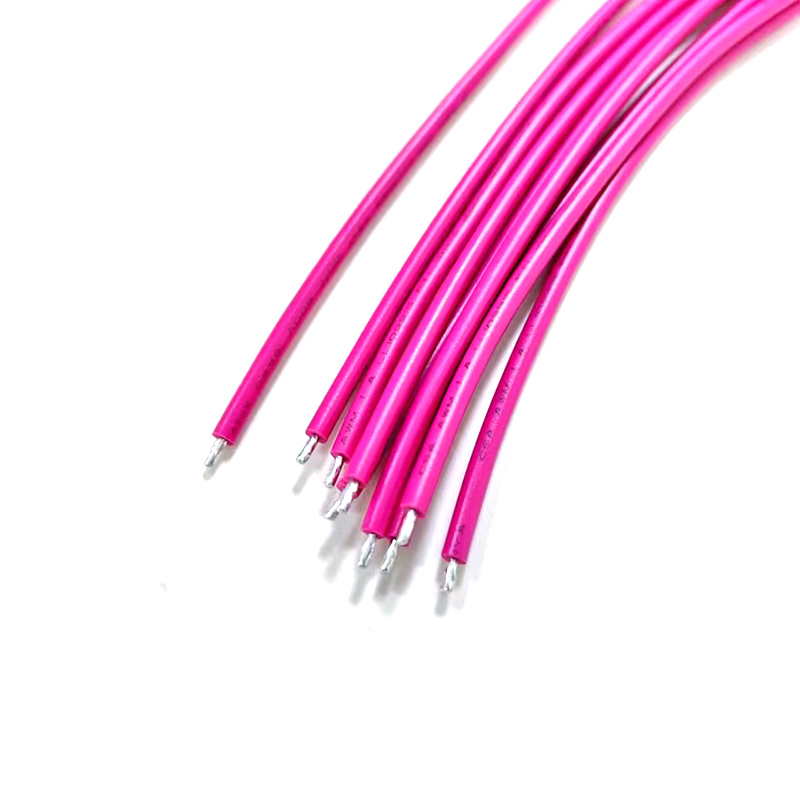
PVC is widely used for industrial wiring because it provides electrical insulation, flexibility, and practical mechanical protection at a competitive cost.
However, "PVC insulated" does not automatically mean that every cable is suitable for every environment.
Procurement teams should confirm:
Rated voltage
Temperature rating
Insulation thickness
Flexibility requirements
Flame-retardant requirements where applicable
Oil or chemical exposure requirements
UV/weather resistance where applicable
Applicable regulatory requirements
For equipment installed indoors inside control cabinets, standard PVC insulation may be sufficient.
For outdoor equipment or applications exposed to sunlight, temperature fluctuations, moisture, oil, or chemicals, the insulation specification should be selected according to the actual environment.
A practical sourcing rule
Do not choose PVC insulation based solely on price. Choose it based on the application's voltage, temperature, mechanical, and environmental requirements.
This is particularly important for equipment exported to different markets because environmental conditions and regulatory expectations can vary.
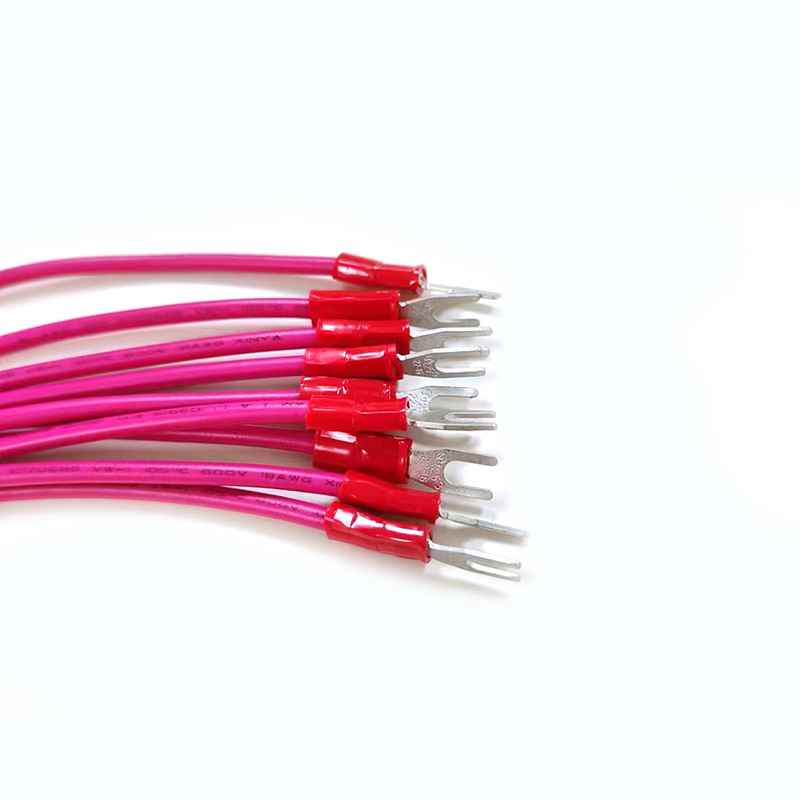
5. Fork Terminal Crimping Is a Critical Quality-Control Point
The terminal may be small, but the crimped connection is one of the most important parts of the assembly.
A poor crimp can result in:
Increased contact resistance
Localized heating
Mechanical loosening
Intermittent electrical faults
Pull-out failures
Equipment downtime
A reliable pre-crimped fork terminal wire therefore requires controlled stripping and crimping processes.
Important crimping parameters include:
Correct terminal model
Correct conductor size
Correct crimping die
Conductor insertion depth
Crimp height/geometry
Terminal positioning
Insulation support where applicable
Pull-force performance
Visual inspection
A professional manufacturer should establish a defined crimping process rather than relying solely on operator experience.
For mass production, process consistency is especially important because a cable assembly that works correctly in one sample is not enough. The same crimp quality must be maintained across hundreds or thousands of assemblies.
6. Terminal Matching: The "Fork" Shape Is Not Enough
One of the most common procurement mistakes is specifying only "fork terminal" without providing the actual mating requirements.
The terminal must match the customer's connection system.
Before ordering, confirm:
Terminal-related specifications
Fork opening size
Stud/screw diameter
Terminal material
Terminal plating
Wire-entry range
Insulation support
Terminal thickness
Applicable temperature range
Mating hardware
For example, a terminal designed for one screw size may not provide the required mechanical fit for another connection point.
Therefore, buyers should provide a drawing, sample, part number, or detailed terminal specification whenever possible.
Evershine can work from customer drawings or technical specifications to customize terminal selection, wire length, conductor specification, and other assembly requirements.
7. AWG and Wire Length Should Be Confirmed Before Sampling
A custom assembly normally requires at least two basic electrical dimensions:
Conductor size + wire length
For example:
Single-core PVC insulated copper wire + specified AWG + specified length + fork terminal
However, an OEM drawing may contain additional requirements such as:
Overall length
Stripped length
Terminal orientation
Terminal position
Wire color
Printing
Connector or terminal model
Tolerance
Packaging quantity
Why does wire length matter?
If the cable is too short, installation becomes difficult and may create excessive mechanical stress.
If it is too long, the wiring space becomes crowded and cable management becomes less efficient.
For equipment manufacturers, customized length can also reduce the need for operators to cut and process wires during final assembly.
8. Compliance: RoHS and REACH Should Be Part of Supplier Qualification
For products entering international supply chains, environmental compliance should be considered during supplier selection rather than after production.
Depending on the destination market and application, buyers may request documentation related to:
RoHS
REACH
Material declarations
Component specifications
Test reports
Supplier declarations of conformity
RoHS addresses restrictions on specified hazardous substances in applicable electrical and electronic products, while REACH regulates chemicals within the European Union.
However, buyers should distinguish between:
"The product can be manufactured to meet a requirement"
and
"The supplier has documentation demonstrating compliance."
For B2B procurement, the second point is much more valuable.
When qualifying an industrial wiring harness supplier, request the applicable compliance documentation before placing a large production order.
9. What Should Be Included in the Technical Specification?
A clear specification prevents most avoidable sourcing problems.
A recommended RFQ specification for a fork terminal cable assembly should include:
| Parameter | Example Requirement |
|---|---|
| Cable type | Single-core PVC insulated copper wire |
| Conductor | Copper |
| Wire size | Customer-defined AWG |
| Wire length | Customer-defined |
| Insulation | PVC |
| Wire color | Customer-defined |
| Terminal | Fork-type terminal |
| Terminal size | Customer-defined |
| Terminal material | Copper/brass or specified material |
| Plating | Tin-plated or specified |
| Crimping | Controlled crimp process |
| Stripping length | Drawing-defined |
| Compliance | RoHS / REACH where required |
| Quantity | Prototype / pilot / mass production |
| Packaging | Customer-defined |
| Inspection | Electrical + dimensional + visual inspection |
The more precise the RFQ, the less likely the buyer will encounter discrepancies between the approved sample and mass production.
10. Key Procurement Problems and How to Avoid Them
Problem 1: The sample is good, but mass production varies
This can happen when the supplier lacks adequate process control.
Solution
Ask about:
Incoming material inspection
First-piece inspection
In-process inspection
Crimp inspection
Electrical testing
Final inspection
Batch traceability
Mass-production quality should not depend entirely on one operator.
Problem 2: Terminal pulls out during installation
This may indicate incorrect terminal selection, conductor size mismatch, poor stripping, or inadequate crimping.
Solution
Request crimping validation and, where applicable, pull-force testing.
Problem 3: The wire becomes brittle or performs poorly outdoors
This may occur when the PVC formulation or cable specification does not match the application environment.
Solution
Define temperature, UV, moisture, oil, and chemical exposure requirements before ordering.
Problem 4: The terminal does not fit the customer's screw or stud
This is usually a specification problem rather than a production problem.
Solution
Provide a drawing, sample, terminal part number, or exact mating dimensions.
Problem 5: The supplier's delivery time is too long
Custom assemblies require material preparation, tooling, sampling, inspection, and production scheduling.
Solution
At the RFQ stage, ask for a complete timeline covering:
Drawing confirmation → material preparation → sample → approval → mass production → final inspection → shipment
A supplier with a clearly defined sampling process can usually provide a more predictable production schedule.
11. Data Evidence: What Should a Qualified Supplier Be Able to Verify?
For B2B cable assembly procurement, "quality" should be converted into measurable inspection points.
Depending on the product specification, a supplier may establish inspection records covering:
Electrical testing
Conductor continuity
Resistance
Short-circuit testing where applicable
Insulation-related electrical testing according to the agreed specification
Mechanical testing
Terminal pull-force testing
Crimp geometry inspection
Terminal retention
Wire stripping verification
Dimensional testing
Overall wire length
Strip length
Terminal dimensions
Crimp position
Terminal orientation
Appearance inspection
PVC surface condition
Terminal deformation
Copper exposure
Crimp appearance
Marking and identification
This approach is more meaningful than simply stating "100% quality inspection."
The important question for procurement teams is:
What is inspected, how is it inspected, and what acceptance criteria are applied?
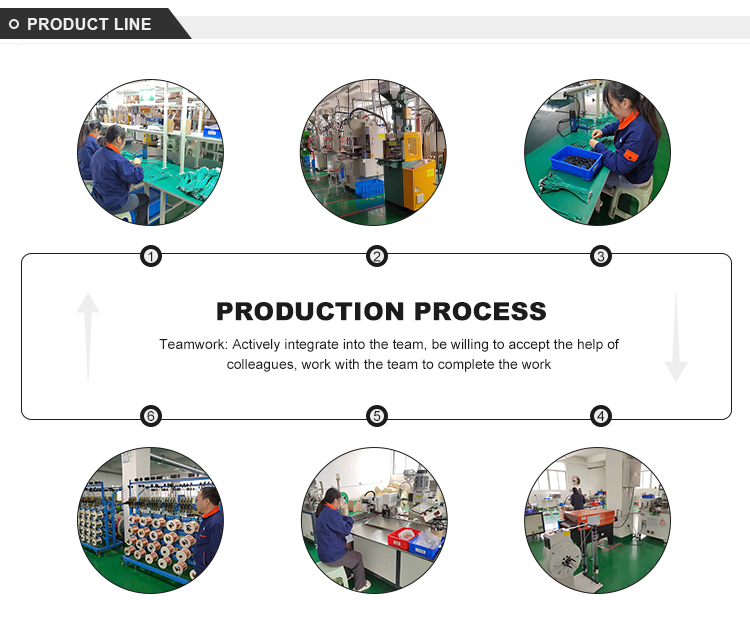
12. Why Evershine Is a Practical Choice for Custom Cable Assembly Projects
For OEM and industrial customers, Evershine provides cable and wire harness development, manufacturing, and sales services, with a focus on customized wiring solutions.
For projects involving custom cable assembly, customers can provide:
Engineering drawings
Product samples
Wire specifications
Terminal specifications
Wiring diagrams
Required quantities
Application requirements
Based on the project requirements, Evershine can customize key parameters such as:
Wire length + AWG specification + PVC insulation + terminal model + stripping length + crimping configuration
This makes the assembly suitable for applications where standard off-the-shelf wires cannot provide the required installation dimensions.
Evershine's customization workflow
1. Drawing / sample review
↓
2. Wire and terminal specification confirmation
↓
3. Production process evaluation
↓
4. Sample manufacturing
↓
5. Customer testing and approval
↓
6. Mass production
↓
7. Full-process inspection
↓
8. Packaging and delivery
For overseas OEM buyers, early sample validation is particularly valuable because it allows the engineering team to verify terminal fit, cable length, installation method, and electrical performance before committing to a large production volume.
13. Which Applications Can Use Custom Fork Terminal Cable Assemblies?
The product is particularly suitable where electrical connections are repetitive and standardized.
Control Cabinets
Pre-crimped wires can simplify connections between terminal blocks, relays, breakers, controllers, and other electrical components.
Industrial Equipment
Customized cable lengths help reduce excess wiring and make machine assembly more organized.
Automation Systems
OEM automation equipment often requires repeatable wiring configurations across multiple machines.
New Energy Equipment
Battery-related and energy equipment can require customized conductor sizes, terminal configurations, and controlled assembly processes. The exact cable specification should always be determined according to the electrical and environmental requirements of the equipment.
Electrical Panels
Pre-assembled wires can help improve installation efficiency while reducing manual crimping work during panel assembly.
14. 2026 Buyer Checklist: 8 Questions to Ask Your Supplier
Before ordering a fork terminal cable assembly, overseas buyers should ask:
What conductor material and construction are used?
What AWG or cross-sectional area can you manufacture?
What PVC insulation specifications are available?
Can the fork terminal be customized to our screw/stud dimensions?
How is crimping quality controlled?
Can you provide RoHS/REACH-related documentation when required?
Can you manufacture according to our drawing or sample?
What is the sample lead time and mass-production lead time?
If a supplier cannot provide clear answers to these questions, the purchasing risk is higher than the apparent unit-price difference may suggest.
15. From "Cheap Wire" to "Reliable Wiring Solution"
The lowest unit price does not necessarily represent the lowest total procurement cost.
A more useful B2B evaluation model is:
Total Cost = Component Cost + Assembly Labor + Inspection Cost + Rework Risk + Installation Time + Delivery Risk
A properly engineered custom cable assembly can reduce several downstream costs simultaneously.
For OEMs producing electrical equipment in volume, the value of a pre-crimped fork terminal wire is therefore not limited to the wire and terminal themselves. It also includes standardized processing, repeatability, installation convenience, and quality control.
Conclusion: Choose the Cable Assembly Based on the Application, Not Just the Price
Sourcing PVC-insulated fork terminal single-core cable assemblies in 2026 requires a more systematic approach than simply comparing quotations.
The key factors are:
Copper conductor quality → PVC insulation → AWG specification → terminal compatibility → crimping reliability → dimensional accuracy → RoHS/REACH compliance → batch consistency → sampling speed → production capability
For equipment manufacturers, electrical engineers, and industrial system integrators, working directly with a capable cable assembly manufacturer can simplify the transition from engineering drawing to mass production.
Evershine supports customized wire and cable assembly requirements, including drawing-based customization, adjustable wire lengths, terminal selection, cable specifications, sample production, and full-process inspection.
If you are developing a new fork terminal cable assembly, single core PVC insulated copper wire, or industrial wiring harness, send Evershine your drawing, sample, or technical specification. The engineering team can evaluate the requirements and provide a customized cable assembly solution for your application.
Recommended RFQ information:
Wire type + AWG + length + PVC specification + terminal model + terminal size + stripping length + quantity + application + compliance requirements.
Evershine — Custom Wire & Cable Assembly Solutions for OEM and Industrial Applications.