


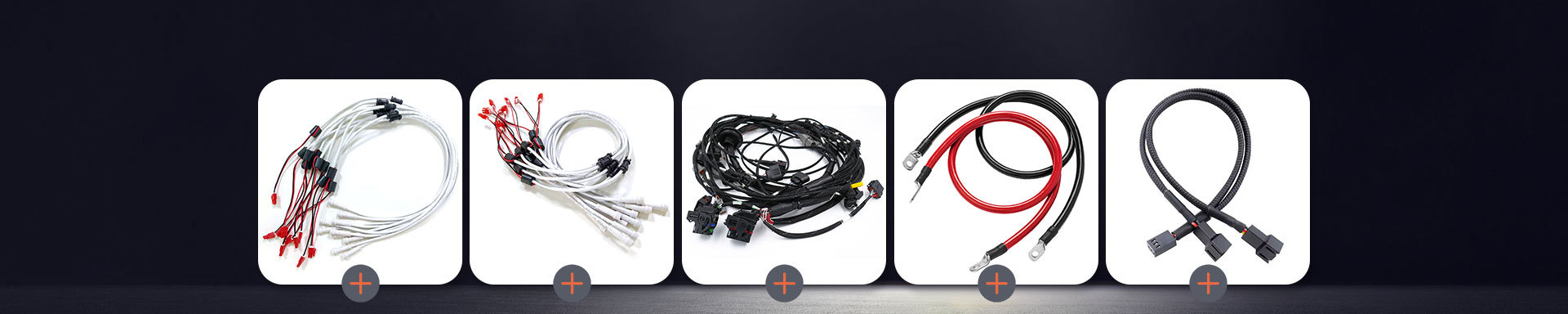
What Specifications Should Motorcycle Manufacturers Look for When Sourcing Universal Motorcycle Automotive Wiring Harness?
2026-11-11 10:07For motorcycle manufacturers, brand owners, and aftermarket parts wholesalers, sourcing a universal motorcycle wiring harness is not simply a matter of finding a cable assembly with compatible connectors. The harness must match the motorcycle's electrical system, installation layout, operating temperature, vibration exposure, and environmental conditions.
A wiring harness that looks suitable during initial inspection may still cause problems after installation. Incorrect wire sizing can lead to voltage drop or overheating. Poor terminal crimping may result in intermittent electrical connections. Inadequately protected connectors can allow moisture and dust to affect electrical performance.
This is why buyers should evaluate the technical specifications of an automotive wiring harness for motorcycle applications before placing a bulk order.
For OEM motorcycle projects, the purchasing process should cover wire temperature ratings, conductor specifications, connector protection, vibration resistance, electrical testing, and customization capabilities. Buyers should also confirm whether the supplier can manufacture according to approved drawings or reference samples.
Xiamen Evershine Electronic Technology Co., Ltd. specializes in the development, production, and sales of wires, cables, and wiring harness products. This guide explains the key specifications motorcycle manufacturers and distributors should check when selecting a universal or custom motorcycle wiring harness.
1. Why Do Motorcycle Manufacturers Need to Check Wiring Harness Specifications?
Motorcycles operate in an environment where electrical connections are exposed to continuous vibration, temperature fluctuations, moisture, dust, and mechanical movement.
Compared with many stationary electrical applications, motorcycle wiring harnesses often have limited installation space and complex routing requirements. Some wires are installed near the engine, while others pass through the frame, steering area, lighting assemblies, or under-seat compartments.
A poorly specified harness may cause several problems:
Electrical instability: Incorrect wire sizing or poor connections can cause voltage drop, unstable lighting, or intermittent electrical functions.
Insulation damage: Excessive heat, abrasion, or chemical exposure may accelerate insulation aging.
Connector failure: Insufficient terminal retention or inadequate sealing may affect electrical continuity.
Vibration-related damage: Repeated movement can place stress on wire branches, crimps, and connector interfaces.
Installation difficulties: Incorrect harness length, connector orientation, or pin assignments can increase assembly time.
After-sales costs: Compatibility issues and premature failures may lead to warranty claims, replacement costs, and distributor complaints.
For motorcycle OEMs, these risks make technical specification review an important part of supplier qualification.
A suitable automotive wiring harness for motorcycle applications should be selected according to the actual vehicle platform rather than appearance or a general product description.
2. How to Choose the Right Universal Motorcycle Wiring Harness
The term "universal motorcycle wiring harness" is commonly used in the aftermarket. However, universal does not mean that one harness is compatible with every motorcycle.
Different motorcycles may use different electrical architectures, connector interfaces, circuit layouts, and mounting positions. A harness designed for one model may require modifications before it can be installed on another.
Buyers should consider the following factors.
2.1 Confirm Electrical System Compatibility
Start by identifying the motorcycle's electrical system and circuit requirements.
Important information includes:
Nominal system voltage, such as 12 V DC.
Battery and charging-system specifications.
Lighting and ignition circuit requirements.
Starter and auxiliary circuit loads.
Fuse and circuit protection arrangements.
Grounding and return-path design.
A universal harness should not be selected solely because its connectors appear similar to the original components. Buyers should confirm pin assignments, circuit functions, and electrical compatibility.
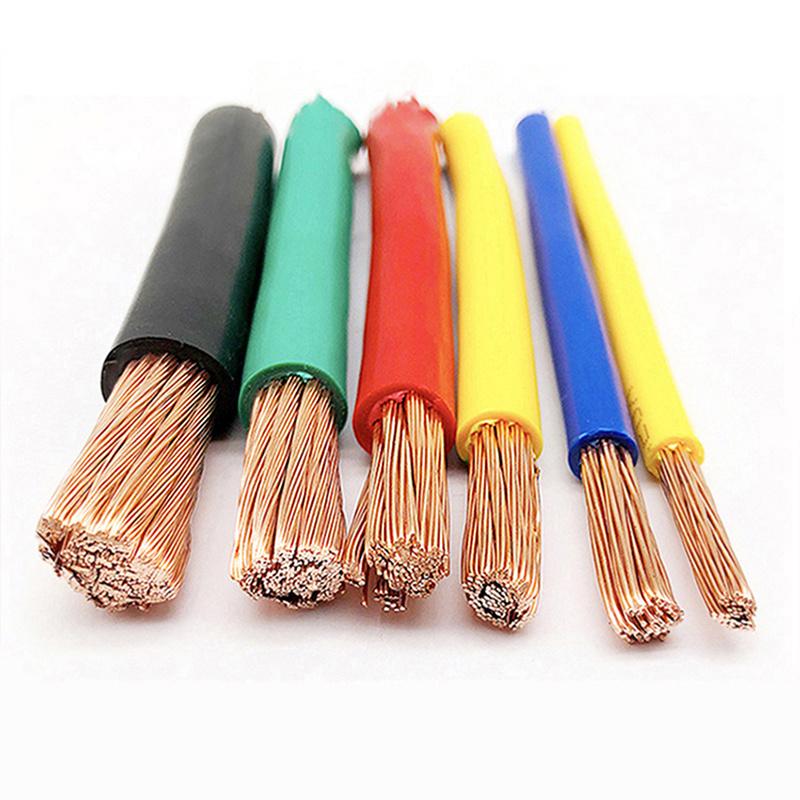
2.2 Select the Correct Wire Material and Cross-Section
Conductor material and cross-sectional area directly affect electrical resistance, current-carrying capability, flexibility, and voltage drop.
Copper conductors are widely used in vehicle wiring applications because of their electrical conductivity and established use in low-voltage electrical systems.
However, the correct wire size depends on more than nominal current. Buyers should also consider circuit length, operating temperature, installation conditions, cable bundling, and duty cycle.
For example, a starter circuit and a low-current sensor circuit should not automatically use the same conductor size.
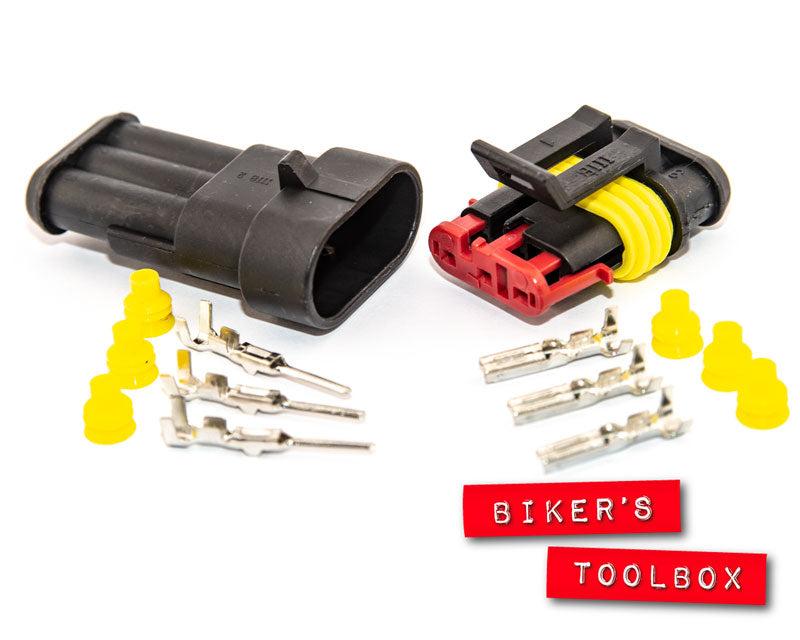
2.3 Evaluate Connector Compatibility
Connectors must match the vehicle's mating interfaces, terminal arrangement, and electrical requirements.
Before ordering, confirm:
Connector manufacturer and part number.
Number of pins and terminal positions.
Terminal material and plating, where specified.
Wire-to-terminal compatibility.
Locking and retention structure.
Seal design and cable-entry dimensions.
Required current and voltage ratings.
For OEM production, it is preferable to identify connectors by part number rather than relying on photographs alone.
2.4 Consider Installation Space and Harness Routing
The harness must fit the motorcycle's frame and component layout.
Check the overall harness length, branch lengths, connector orientation, mounting points, bend radius, and clearance from moving or hot components.
Particular attention should be given to the steering head, where wiring may move as the handlebars turn. Insufficient slack or unsuitable routing can place repeated mechanical stress on the wires and connectors.
3. Key Technical Specifications Buyers Should Verify
A professional purchasing specification should describe the complete harness rather than only the wire type or connector model.
3.1 Wire Temperature Rating
Motorcycle wiring harnesses may be installed near engines, exhaust components, voltage regulators, and other heat-generating parts.
If the wire insulation is not suitable for the operating temperature, prolonged heat exposure may cause hardening, cracking, deformation, or reduced insulation performance.
Buyers should verify:
Minimum and maximum rated operating temperatures.
Insulation material.
Thermal aging performance.
Resistance to oil, fuel, and other relevant chemicals.
Flexibility at low temperatures.
Installation distance from heat sources.
Common insulation materials include PVC, XLPE, silicone, and other specialized polymers. Their suitability depends on the actual application and the manufacturer's verified material specification.
The following table provides a selection framework. The values are not universal ratings for every material grade and must be confirmed against the selected wire datasheet.
| Specification | What buyers should check | Why it matters |
|---|---|---|
| Conductor material | Copper or specified alternative | Affects electrical resistance and performance |
| Cross-sectional area | mm² or AWG | Supports current and voltage-drop requirements |
| Insulation material | PVC, XLPE, silicone, or specified type | Determines environmental and thermal suitability |
| Temperature rating | Manufacturer's rated temperature range | Helps match the wire to installation conditions |
| Rated voltage | Applicable wire specification | Must match the electrical system |
| Flexibility | Construction and bending requirements | Important for compact and moving sections |
| Chemical resistance | Oil, fuel, cleaning agents, and other exposure | Helps reduce insulation degradation |
Do not assume that all PVC wires have the same temperature rating or that a material name alone proves suitability for a particular motorcycle application.
3.2 Connector Waterproof and Dust Protection
Motorcycles are regularly exposed to rain, road spray, humidity, dust, and washing conditions.
The required connector protection depends on where the connector is installed and how it is exposed.
For example:
Under-seat connectors may experience humidity and occasional water exposure.
External lighting connectors may be exposed to rain and road spray.
Engine-area connectors may face heat, oil, vibration, and moisture.
Off-road motorcycle connectors may experience mud, dust, and more severe water exposure.
The IP Code defined by IEC 60529 is commonly used to classify protection against solid foreign objects and water ingress for specified enclosures or assemblies.
For motorcycle harness procurement, buyers may specify a target such as IP65, IP67, or another appropriate level, but the rating must be supported by the actual connector or assembly test configuration.
| IP rating | General protection meaning | Potential procurement consideration |
|---|---|---|
| IP65 | Dust-tight and protected against water jets | Applications exposed to dust and water spray |
| IP67 | Dust-tight and protected against temporary immersion under specified test conditions | Selected connectors in locations with possible temporary immersion |
| IP68 | Dust-tight and protected against continuous immersion under conditions specified by the manufacturer | Applications requiring a defined immersion protection level |
An IP rating should not be interpreted as a guarantee that the complete motorcycle wiring harness is waterproof under every installation condition.
Buyers should confirm whether the rating applies to the mated connector, cable-entry seal, unused connector positions, and the complete assembly.
3.3 Vibration Resistance and Mechanical Durability
Motorcycle engines, road surfaces, and vehicle movement generate continuous mechanical vibration.
Repeated vibration may affect terminal retention, connector locking, wire insulation, and the mechanical integrity of crimped connections.
When evaluating a custom motorcycle wiring harness, buyers should check:
Terminal retention and locking performance.
Crimp quality and mechanical strength.
Wire flexibility and strain relief.
Protective sleeves and abrasion resistance.
Routing around moving parts.
Connector compatibility under vibration exposure.
Whether the project requires a defined vibration test profile.
Vibration testing should use conditions representative of the intended motorcycle application. Test frequency, acceleration, duration, mounting method, and acceptance criteria should be specified rather than using an undefined statement such as "vibration resistant."
3.4 Terminal Crimping and Electrical Connection Quality
The terminal crimp is one of the most important manufacturing details in a wiring harness.
A poor crimp may increase contact resistance or reduce mechanical retention. Under operating conditions, this can contribute to localized heating and intermittent electrical faults.
Buyers should review:
Terminal compatibility with the conductor.
Wire-stripping dimensions.
Crimp height and width, where specified.
Crimp appearance and workmanship.
Pull-force requirements.
Electrical continuity and resistance requirements.
For volume production, consistent tooling, process controls, and inspection records help maintain product repeatability.
3.5 Harness Length, Branches, and Connector Layout
The physical structure of the harness should match the motorcycle's installation design.
A purchasing drawing should identify:
Overall harness length.
Branch lengths and positions.
Connector locations and orientation.
Wire color and circuit identification.
Protective tubing and sleeves.
Mounting clips and fixing points.
Required labels and markings.
This information is especially important when a buyer needs to replace an existing harness or develop a new harness for an OEM motorcycle platform.
4. Which Standards and Certifications Should Motorcycle Harness Buyers Consider?
Motorcycle manufacturers and importers may encounter different standards depending on the product type, destination market, and customer requirements.
There is no single certificate that automatically proves every motorcycle wiring harness is suitable for every market.
The following standards and regulatory references may be relevant when defining a project specification.
| Standard or regulation | Main area | How buyers may use it |
|---|---|---|
| QC/T 417-2021 | Electrical wire harness assemblies for motorcycles and mopeds | Reference for applicable motorcycle harness and connector requirements |
| IEC 60529 | IP protection classification | Defines enclosure protection against dust and water under specified tests |
| ISO 16750 series | Environmental conditions and testing for road vehicle electrical and electronic equipment | Helps define relevant mechanical, climatic, and chemical test conditions |
| ISO 6722 series | Road vehicle electrical cables | Reference for applicable cable construction and performance requirements |
| ISO 8092 series | Connections for on-board electrical wiring harnesses | Reference for applicable automotive wiring connection requirements |
The applicability of each standard depends on the product design, edition, scope, and customer specification.
4.1 QC/T 417-2021 for Motorcycle and Moped Harness Assemblies
QC/T 417-2021 is a Chinese automotive industry standard titled "Electrical wire harness assemblies for motorcycles and mopeds."
It covers motorcycle and moped wiring harness assemblies and relevant connectors, with technical requirements and test methods.
For buyers sourcing motorcycle harnesses from China, it can be a useful reference when discussing product specifications and verification requirements with suppliers.
However, buyers should confirm whether this standard is required by the project or destination market rather than assuming that it is a universal export certification.
4.2 IEC 60529 for Connector Protection
IEC 60529 defines the IP Code used to classify protection against access, solid foreign objects, and water ingress.
If a motorcycle harness requires sealed connectors, buyers should specify the target IP rating and the relevant test configuration.
The connector's rating should be supported by appropriate documentation. A supplier should not claim that an entire wiring harness meets IP67 simply because one connector component has an IP67 rating.
4.3 ISO 16750 for Vehicle Environmental Testing
The ISO 16750 series addresses environmental conditions and testing for electrical and electronic equipment in road vehicles.
Depending on the relevant part and application, it can provide a framework for evaluating mechanical, climatic, and chemical loads.
For motorcycle harness projects, buyers should define the applicable test conditions and acceptance criteria with their engineering team. The test profile should reflect the actual installation location and operating environment.
4.4 What About CE, RoHS, and Other Compliance Requirements?
CE marking, RoHS, and other compliance requirements should not be treated as universal certificates for motorcycle wiring harnesses.
Their applicability depends on the product's legal classification, intended use, destination market, and the requirements governing the finished vehicle or separately marketed product.
For automotive projects, buyers should identify applicable vehicle regulations, component requirements, material restrictions, and OEM specifications.
A supplier's test report or material declaration should clearly identify the tested product, material, test scope, and relevant standard. It should not be presented as a blanket approval for every motorcycle application.
5. Which Motorcycle Applications Need Customized Wiring Harnesses?
Although universal harnesses can serve certain standard replacement and modification applications, different motorcycle categories may require different technical configurations.
5.1 Commuter Motorcycles and Scooters
Commuter motorcycles and scooters generally require harnesses for lighting, ignition, charging, instrumentation, switches, and other electrical functions.
For these products, buyers should prioritize:
Correct connector and pin configuration.
Suitable conductor cross-section.
Reliable terminal crimping.
Compact routing and branch dimensions.
Appropriate protection against moisture and abrasion.
5.2 Off-Road and Adventure Motorcycles
Off-road motorcycles may experience mud, dust, water, impacts, and more severe vibration.
Harness designs for these applications may require additional mechanical protection, sealed connectors, suitable strain relief, and carefully planned routing.
The protection requirements should reflect the actual operating conditions rather than relying on a generic universal harness specification.
5.3 Touring and Performance Motorcycles
Touring and performance motorcycles may contain additional electrical accessories, lighting systems, sensors, and control components.
The harness must accommodate the actual electrical load and installation requirements. Buyers should verify current capacity, circuit protection, connector compatibility, and routing around heat-generating components.
5.4 Electric Motorcycles
Electric motorcycles may use both low-voltage control harnesses and high-voltage power connections.
These assemblies should be treated as different product categories. High-voltage applications require additional attention to voltage rating, insulation design, connector systems, electrical protection, and applicable safety validation.
A conventional low-voltage motorcycle harness should never be assumed suitable for a high-voltage circuit without engineering evaluation.
6. How to Evaluate a Motorcycle Wiring Harness Manufacturer
Choosing a motorcycle wiring harness manufacturer is a key procurement decision for overseas motorcycle brands and aftermarket distributors.
A supplier should be able to understand the application, confirm technical requirements, manufacture the agreed configuration, and provide appropriate quality documentation.
Before placing an order, buyers should evaluate the following factors.
| Supplier evaluation factor | Questions to ask |
|---|---|
| Product experience | Does the supplier manufacture wire, cable, and wiring harness products? |
| Customization | Can it manufacture according to drawings, samples, or confirmed specifications? |
| Wire selection | Can the supplier confirm conductor size and insulation requirements? |
| Connector sourcing | Can it identify and verify the required connector and terminal models? |
| Production control | Are assembly processes and inspection requirements defined? |
| Testing | Can it provide the agreed electrical or environmental test evidence? |
| Documentation | Can it provide drawings, BOM information, and relevant material documents? |
| Change management | Are material and design changes reviewed before implementation? |
| Communication | Can technical questions and sample revisions be handled efficiently? |
A Practical RFQ Checklist for Motorcycle Manufacturers
To obtain a more accurate quotation, provide the following information:
Motorcycle model, model year, and vehicle category.
Electrical system voltage and circuit diagram.
Wire type, conductor size, and insulation requirements.
Connector manufacturer and part numbers.
Harness length, branch positions, and routing details.
Required IP protection level, if applicable.
Operating temperature and environmental conditions.
Required electrical, vibration, or environmental tests.
Applicable customer standards and market requirements.
Prototype quantity, estimated production volume, and packaging requirements.
The more complete the RFQ, the easier it is for a supplier to evaluate technical feasibility and identify potential compatibility issues before sample production.
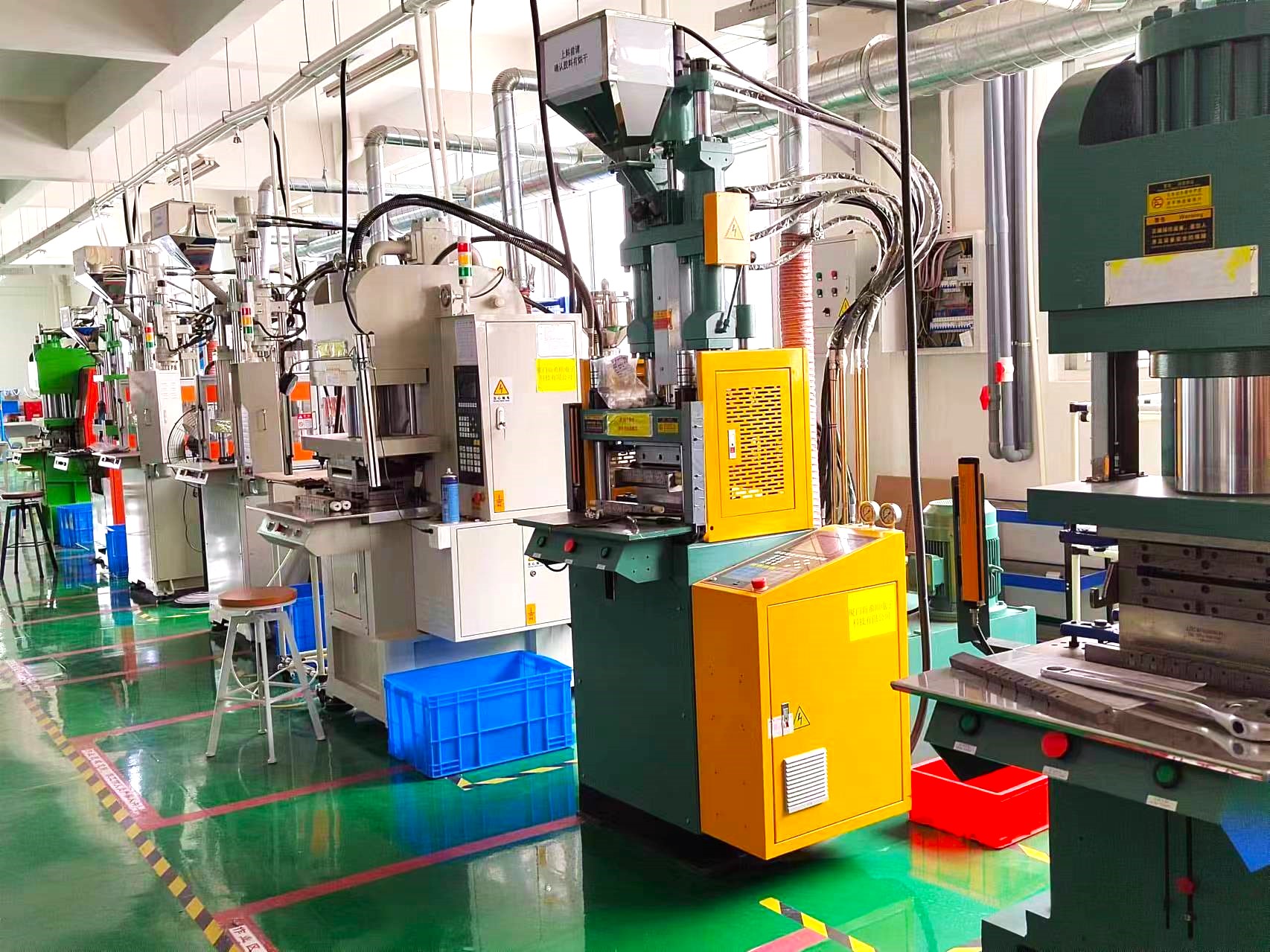
7. How Does Xiamen Evershine Support Custom Motorcycle Wiring Harness Projects?
Xiamen Evershine Electronic Technology Co., Ltd. is a wire, cable, and wiring harness manufacturer focused on product development, production, and sales.
For motorcycle manufacturers, brand owners, and parts distributors, the company supports customized wiring harness requirements based on customer drawings, reference samples, and confirmed technical specifications.
7.1 Drawing-Based and Sample-Based Customization
Different motorcycle models require different wiring layouts, connector configurations, and installation dimensions.
Customers can provide:
Wiring diagrams.
Product drawings.
Existing harness samples.
Connector and terminal specifications.
Wire and insulation requirements.
Target dimensions and branch positions.
Based on the information provided, the product configuration can be evaluated and developed according to the confirmed project requirements.
This approach is suitable for OEM motorcycle projects, replacement harnesses, and selected aftermarket applications.
7.2 Wire, Cable, and Harness Product Coordination
A custom harness may involve multiple wire specifications, connectors, terminals, protective materials, and assembly details.
By working with a supplier focused on wires, cables, and wiring harness products, buyers can coordinate these requirements within one project communication process.
The actual product scope, component availability, and production arrangement should be confirmed during quotation and technical review.
7.3 Technical Specification and Sample Confirmation
Before batch production, buyers and the manufacturer should confirm the approved drawing, BOM, connector configuration, wire specifications, and inspection requirements.
Sample evaluation can focus on:
Harness dimensions and branch layout.
Connector and terminal compatibility.
Wire color and identification.
Crimping and assembly workmanship.
Electrical continuity and pin mapping.
Other tests agreed for the application.
This helps reduce the risk of producing a batch that differs from the approved design.
7.4 Coordinated Production and Delivery
For buyers sourcing multiple harness configurations, project coordination is important.
Xiamen Evershine Electronic Technology Co., Ltd. can discuss the required wire, cable, and harness products according to the confirmed order scope, technical specifications, and delivery requirements.
Before ordering, buyers should agree on product revisions, inspection criteria, packaging, labeling, and the documentation required for shipment.
8. How to Start Your Motorcycle Wiring Harness Project
Whether you are developing a new motorcycle model, sourcing replacement wiring harnesses, or expanding an aftermarket parts range, the first step is to define the electrical and mechanical requirements clearly.
You can prepare the following information for supplier evaluation:
Motorcycle application and model information.
Wiring diagram or existing harness sample.
Wire gauge and insulation requirements.
Connector and terminal part numbers.
Harness dimensions and branch layout.
Temperature, vibration, and water-exposure conditions.
Required standards, tests, and documentation.
Estimated order quantity and delivery expectations.
Xiamen Evershine Electronic Technology Co., Ltd. welcomes inquiries from motorcycle OEMs, overseas brands, distributors, and aftermarket parts wholesalers.
Send your drawings, samples, or technical specifications to discuss a suitable custom motorcycle wiring harness for your project.
Frequently Asked Questions
Q1: Is a universal motorcycle wiring harness compatible with all motorcycle brands?
No. Universal harnesses may be designed for a range of applications, but connector types, pin assignments, circuit layouts, wire lengths, and electrical systems vary between motorcycle models. Buyers should verify compatibility before ordering.
Q2: What temperature rating should a motorcycle wiring harness have?
There is no single temperature rating suitable for every motorcycle harness. The required rating depends on the installation location, ambient temperature, nearby heat sources, current load, and insulation material. Buyers should confirm the actual operating range and the wire manufacturer's datasheet.
Q3: Should motorcycle wiring harness connectors be waterproof?
The required water protection depends on the connector's installation location and exposure conditions. Connectors exposed to rain, road spray, mud, or washing may require sealed designs and a defined IP rating. The complete connector configuration should be evaluated rather than relying on a connector's appearance.
Q4: How can buyers check whether a motorcycle wiring harness is vibration-resistant?
Buyers should review connector locking, terminal retention, crimp quality, strain relief, cable routing, and mechanical protection. If the project requires vibration testing, the test profile and acceptance criteria should be agreed before production.
Q5: Can Evershine manufacture a custom motorcycle wiring harness according to drawings or samples?
Yes. Xiamen Evershine Electronic Technology Co., Ltd. supports customized wire, cable, and wiring harness projects based on customer drawings, reference samples, and confirmed technical specifications. Buyers should provide the wiring diagram, connector information, dimensions, and electrical requirements for evaluation.
Q6: What tests should be included in a motorcycle wiring harness quality plan?
Common checks include electrical continuity, pin-to-pin mapping, short-circuit checks, conductor resistance, crimp inspection, and terminal pull testing where specified. Depending on the application, the plan may also include vibration, thermal aging, water-ingress, or abrasion tests.
Q7: What information should an overseas distributor provide when ordering motorcycle wiring harnesses in bulk?
Distributors should provide compatible motorcycle models and model years, product part numbers, wiring diagrams or samples, connector specifications, target quantities, packaging requirements, and any applicable quality or compliance documentation requirements.
Conclusion
When sourcing a universal motorcycle wiring harness, manufacturers and distributors should evaluate more than connector compatibility. Wire temperature ratings, conductor size, insulation material, connector protection, terminal crimping, vibration resistance, and harness dimensions all affect product suitability.
For OEM projects, a drawing-based or sample-based custom motorcycle wiring harness is often a more reliable approach than assuming a universal product will fit every motorcycle model.
Working with a capable motorcycle wiring harness manufacturer also helps buyers coordinate product specifications, sample approval, quality checks, and production requirements.
Xiamen Evershine Electronic Technology Co., Ltd. supports wire, cable, and wiring harness customization for customers seeking solutions based on their project drawings and technical requirements.
Contact Evershine with your motorcycle wiring harness specifications to discuss your next OEM or aftermarket project.