


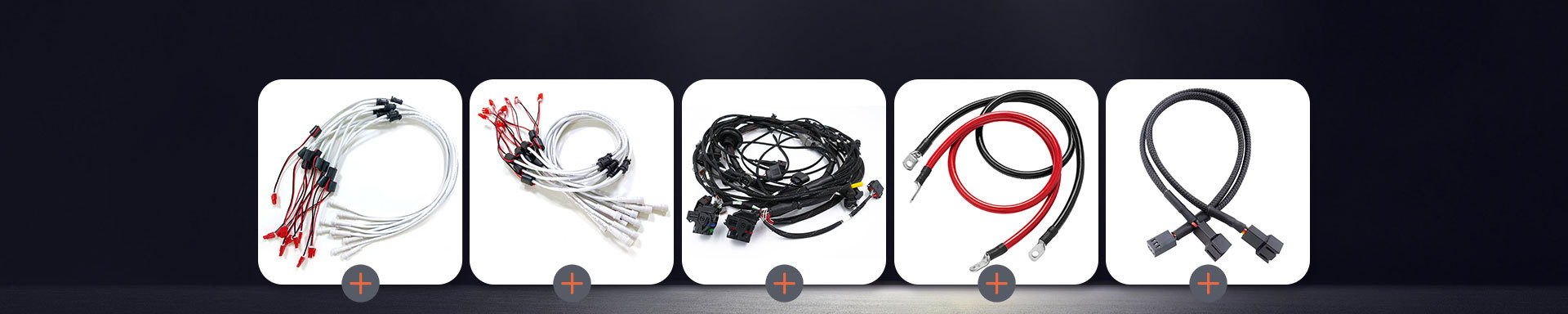
Wire Harness Manufacturing Process: Step-by-Step Guide|Complete Guide from Design, Production to Delivery
2026-07-22 10:01In modern electronic equipment and intelligent manufacturing systems, wire harnesses have become essential components for connecting power, signals, and control systems. From automotive electronics and renewable energy equipment to industrial automation, communication systems, and household appliances, wire harnesses play a critical role similar to the “nervous system” of electrical devices.
However, for purchasing teams, selecting a wire harness supplier is not simply about buying wires and connectors. A reliable wire harness product requires comprehensive engineering design, material selection, precision manufacturing, electrical testing, and strict quality control.
If the manufacturing process is not properly controlled, wire harness failures may result in:
Unstable equipment operation;
Signal transmission problems;
Increased electrical safety risks;
Higher maintenance costs.
So, what does a professional Wire Harness Manufacturing Process include? How can buyers evaluate whether a wire harness manufacturer has reliable production capabilities?
As a professional company specializing in the R&D, manufacturing, and sales of wires, cables, and wire harness products, Xiamen Evershine Electronic Technology Co., Ltd. provides reliable, efficient, and customized wire harness solutions for customers worldwide.

1. Product Definition: What Is a Wire Harness and Why Is Manufacturing Process Important?
1.1 What Is a Wire Harness?
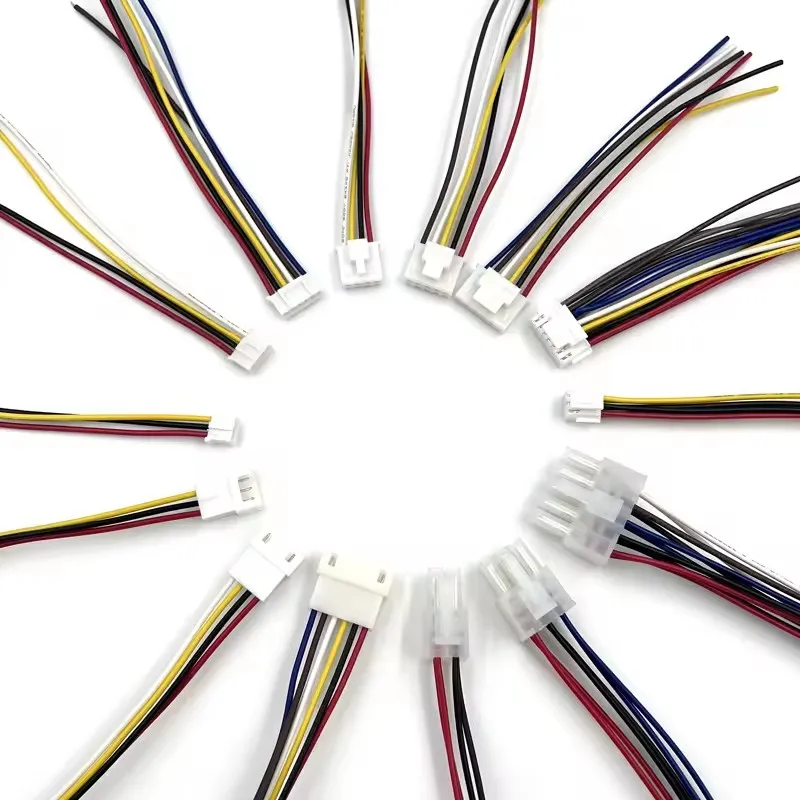
A Wire Harness is an integrated electrical connection assembly that combines multiple wires, cables, terminals, connectors, and protective materials according to specific equipment requirements.
Its main functions include:
Power transmission;
Signal transmission;
Control connection;
Electrical system integration.
Simply put, a wire harness acts as an electrical bridge connecting different functional modules inside a device.
1.2 Main Components of a Wire Harness
A complete wire harness usually consists of:
| Component | Function |
|---|---|
| Wire | Transfers electrical current and signals |
| Terminal | Provides conductor connection |
| Connector | Enables modular electrical connection |
| Insulation Material | Prevents short circuits and external damage |
| Protective Sleeve | Provides mechanical and environmental protection |
| Tape / Clip | Fixes and organizes wire structure |
Different industries have different requirements for wire harness structures, making professional engineering design essential.
2. Application Scenarios: Which Industries Require High-Reliability Wire Harnesses?
With the development of intelligent manufacturing, electrification, and automation technologies, wire harness applications continue expanding across multiple industries.
2.1 Automotive and New Energy Vehicles
The automotive industry is one of the largest application markets for wire harnesses.
Modern vehicles contain a large number of electrical systems, including:
Engine control systems;
Battery management systems;
Intelligent driving systems;
Vehicle entertainment systems.
Compared with traditional vehicles, electric vehicles require more electrical connections, creating higher requirements for wire harnesses:
High voltage resistance;
High temperature durability;
Vibration resistance;
Long service life.
2.2 Industrial Automation Equipment
Smart manufacturing has accelerated demand for customized wire harnesses.
Applications include:
Industrial robots;
PLC control systems;
CNC machines;
Automated production equipment.
Industrial wire harnesses typically require:
High flexibility;
Resistance to mechanical fatigue;
Stable signal transmission;
Long-term continuous operation.
2.3 Communication Equipment Industry
Communication systems require extremely stable signal transmission.
Wire harness applications include:
Network equipment;
Data center systems;
Communication control devices.
Key requirements:
Low signal loss;
Electromagnetic interference protection;
High connection reliability.
2.4 Household Appliances
Household appliances widely use standardized and customized wire harness products.
Examples include:
Air conditioners;
Refrigerators;
Washing machines;
Smart home devices.
Purchasing priorities include:
Product consistency;
Safety performance;
Stable supply capability.
2.5 Marine, Aerospace, and Special Equipment
Special environments require higher wire harness performance.
Important considerations include:
Moisture resistance;
Corrosion resistance;
Temperature variation;
Mechanical impact resistance.
Therefore, professional design capability and strict quality management are essential.
3. Wire Harness Manufacturing Process: Step-by-Step Production Guide
A professional wire harness manufacturing process normally includes the following key steps:
Step 1: Engineering Design and Requirement Analysis
Wire harness manufacturing begins with understanding customer requirements.
Engineers evaluate:
Application environment;
Voltage requirements;
Current specifications;
Installation space;
Product lifetime expectations.
The design stage includes:
Circuit analysis;
Harness layout design;
Connection method confirmation;
Material selection.
A professional supplier does not only manufacture products but also provides engineering optimization suggestions.
Step 2: Material Preparation
Materials are prepared according to design requirements.
Main materials include:
Wire Selection
Considerations:
Conductor size;
Current carrying capacity;
Temperature rating;
Insulation material.
Connector Selection
Must match:
Electrical specifications;
Connection method;
Working environment.
Protection Materials
Including:
PVC sleeves;
Heat shrink tubes;
Braided sleeves;
Corrugated tubes.
Step 3: Wire Cutting Process
Wire cutting is a critical process to ensure dimensional accuracy.
Automatic cutting equipment can complete:
Accurate length cutting;
Automatic stripping;
Batch processing.
Key control points:
Length accuracy;
Stripping quality;
Conductor protection.
Step 4: Terminal Crimping
Terminal crimping directly affects electrical connection reliability.
Important control factors:
Crimp height;
Crimp force;
Pull-out strength.
Poor crimping quality may cause:
Increased contact resistance;
Heat generation;
Signal interruption.
Step 5: Connector Assembly
Terminals are accurately inserted into connectors according to engineering drawings.
Inspection includes:
Insertion position;
Pin arrangement;
Locking condition.
Step 6: Harness Assembly
Using fixtures and assembly boards, wires are arranged into the final harness structure.
Quality control focuses on:
Branch locations;
Wire routing;
Appearance consistency.
Step 7: Electrical Testing
Testing is a key step to guarantee reliability.
| Testing Item | Purpose |
|---|---|
| Continuity Test | Verify correct circuit connection |
| Insulation Test | Prevent electrical leakage |
| High Voltage Test | Verify safety performance |
| Resistance Test | Confirm connection quality |
| Functional Test | Ensure system operation |
Step 8: Packaging and Delivery
After inspection:
Products are classified;
Labels are managed;
Packaging protection is applied;
Shipment is confirmed.
This ensures customers receive qualified wire harness products.
4. Technical Parameters: What Should Buyers Consider When Purchasing Wire Harnesses?
When purchasing wire harness products, buyers should evaluate comprehensive technical specifications.
| Technical Parameter | Importance |
|---|---|
| Wire Gauge | Determines current carrying capacity |
| Rated Voltage | Affects operational safety |
| Temperature Rating | Determines environmental adaptability |
| Connector Type | Ensures compatibility |
| Insulation Material | Influences service life |
| Shielding Performance | Improves EMI protection |
| Length Tolerance | Affects installation accuracy |
| Pull Force | Ensures connection reliability |
Wire Harness Protection Methods: Braiding vs Bundling vs Sleeving
Besides manufacturing processes, protection methods directly influence wire harness durability.
1. Braiding Protection
Braided protection uses PET, nylon, or metal fibers woven around the harness.
Advantages:
Excellent flexibility;
Strong abrasion resistance;
EMI shielding capability.
Applications:
Automotive wire harnesses;
Industrial robots;
Communication equipment.
2. Bundling Protection
Bundling organizes wires using:
Tape;
Cable ties;
Clips.
Advantages:
Lower cost;
Easy installation;
Simple maintenance.
Applications:
Household appliances;
Control cabinets;
General equipment.
3. Sleeving Protection
Sleeving uses protective materials such as:
PVC tubes;
Heat shrink tubes;
Corrugated tubes.
Advantages:
Waterproof protection;
Dust resistance;
Mechanical protection.
Applications:
Industrial equipment;
Energy systems;
Outdoor electrical applications.
Wire Harness Manufacturing Tolerances and Quality Benchmarks
High-quality wire harnesses require not only good design but also strict manufacturing tolerance control.
1. Wire Length Tolerance
| Harness Length | Typical Tolerance Range |
|---|---|
| Less than 300mm | ±2mm |
| 300-1000mm | ±3mm |
| Above 1000mm | ±5mm |
2. Terminal Crimping Standards
Key inspection items:
Crimp height;
Pull force;
Contact resistance.
3. Electrical Testing Standards
Including:
Continuity testing;
Insulation testing;
High voltage testing;
Functional testing.
5. Purchasing Questions: How to Choose a Reliable Wire Harness Manufacturer?
Q1: What Capabilities Should a Professional Wire Harness Supplier Have?
A reliable supplier should provide:
Engineering Capability
Including:
Product design support;
Prototype development;
Technical optimization.
Manufacturing Capability
Including:
Automated production equipment;
Standardized processes;
Stable mass production capability.
Quality Management Capability
Including:
Material inspection;
Production control;
Final product testing.
Q2: Why Choose Customized Wire Harnesses?
Different equipment has different requirements.
Standard products may not meet:
Limited installation space;
Special connectors;
Harsh environments.
Customized wire harness advantages:
More accurate installation;
Reduced modification work;
Improved equipment reliability.
Q3: How Can Buyers Identify a Professional Wire Harness Manufacturer?
Recommended evaluation points:
Does the supplier have engineering support?
Can they develop prototypes?
Do they have complete testing procedures?
Do they have export experience?
6. Industry Data Support: Why Is the Wire Harness Market Growing?
With global growth in intelligent manufacturing, electrification, and digital systems, demand for wire harnesses continues increasing.
| Industry Trend | Impact on Wire Harness Industry |
|---|---|
| Growth of electric vehicles | Drives demand for advanced harnesses |
| Industrial automation upgrade | Increases customized harness applications |
| Smart device expansion | Creates higher connection demand |
| Communication infrastructure development | Boosts high-speed connection requirements |
Industry trends show:
Electric vehicles require more electrical connection components than traditional vehicles;
Increasing industrial robot applications are driving demand for flexible harnesses;
OEM manufacturers increasingly cooperate with professional suppliers for customized development.
Future competition in the wire harness industry will focus on:
Engineering capability;
Fast response;
Manufacturing precision;
Quality management systems.
7. From Requirement to Delivery: Xiamen Evershine Cooperation Process
To help customers quickly obtain suitable wire harness solutions, Xiamen Evershine Electronic Technology Co., Ltd. provides a complete project service process.
Step 1: Requirement Communication
Customers provide:
Product specifications;
Application environment;
Technical requirements;
Quantity requirements.
Step 2: Engineering Evaluation
Our technical team analyzes:
Product structure;
Material selection;
Manufacturing feasibility.
Step 3: Prototype Development
Including:
Sample production;
Performance testing;
Customer approval.
Step 4: Mass Production
Following:
Standardized manufacturing;
Strict quality control;
Production management.
Step 5: Delivery and Long-Term Support
Providing:
Stable supply;
Technical service;
Continuous product improvement support.
Conclusion: Professional Wire Harness Manufacturing Process Determines Product Reliability
Although wire harnesses are not the largest components inside equipment, they perform critical functions in power and signal transmission.
Selecting the right wire harness supplier requires attention to:
Product design capability;
Manufacturing process;
Technical parameter control;
Quality inspection system;
Project support capability.
As a professional wire, cable, and wire harness manufacturer, Xiamen Evershine Electronic Technology Co., Ltd. remains committed to providing reliable, stable, and customized wire harness solutions for global customers.
If you are looking for an experienced Wire Harness Manufacturing Partner, contact Xiamen Evershine Electronic Technology Co., Ltd. today. Our engineering team will provide professional technical support based on your specific application requirements.