

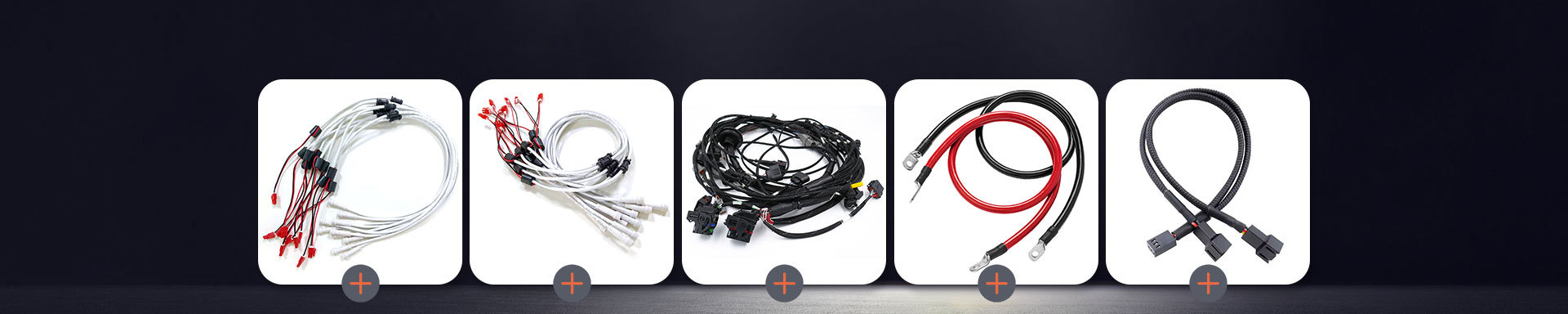
Can RoHS Compliant Custom Automobile Cable Harness Help Your Auto Business Meet EU Market Access Rules?
2026-11-07 17:46For automotive OEMs, auto parts importers, and wiring harness integrators, choosing a cable harness supplier involves more than comparing unit prices and delivery schedules. Material compliance, traceability, product specifications, and supporting documentation can all affect whether a component meets the requirements of a vehicle project.
When sourcing a RoHS car wiring harness, buyers often ask an important question: Can a RoHS-compliant product help reduce regulatory risks when supplying the European market?
The answer depends on the intended application and the regulations that apply to the finished vehicle or component. RoHS material control can be a useful part of a supplier's environmental compliance system. However, automotive wiring harnesses specifically designed for installation in vehicles are generally excluded from the scope of the EU RoHS Directive under its transport-related exclusions. The EU End-of-Life Vehicles (ELV) Directive, together with applicable vehicle regulations and OEM material requirements, is particularly important for automotive components.
For overseas buyers, the practical solution is to select a supplier that understands material restrictions, can provide relevant test documentation, and can manufacture a customized automobile cable harness according to confirmed drawings, samples, and project specifications.
Xiamen Evershine Electronic Technology Co., Ltd. provides wire, cable, and wiring harness development and manufacturing services. This article explains the compliance considerations buyers should evaluate before sourcing custom automotive cable harnesses for EU-related projects.
1. Why Do Automotive Buyers Need to Check Hazardous Substance Compliance?
Automotive wiring harnesses connect electrical and electronic systems throughout a vehicle. Depending on the application, they may contain copper conductors, PVC or other polymer insulation, connector housings, terminal metals, protective sleeves, tapes, and other materials.
Each material may come from a different supplier and may have its own chemical composition. If material information is incomplete or a restricted substance is present beyond an applicable limit, the buyer may face additional verification work, supplier corrective actions, or delays in project approval.
For automotive OEMs and importers, the main concerns include:
Material compliance: Are the insulation, connector, terminal, and protective materials consistent with the project's restricted-substance requirements?
Supplier documentation: Can the manufacturer provide material declarations, test reports, or other supporting evidence?
Supply chain traceability: Can material batches and component sources be identified when a compliance issue occurs?
Customer requirements: Does the harness meet the OEM's own material standards, even where a particular EU directive does not directly apply?
Market-specific obligations: Have the buyer and importer confirmed which regulations apply to the finished vehicle, spare part, or separately marketed electrical product?
A low-cost harness without reliable material documentation may create more purchasing risk than a slightly higher-priced product supported by clear technical records.
2. RoHS and ELV: What EU Rules Should Automotive Wiring Harness Buyers Understand?
One important point should be clarified before placing an order: RoHS and ELV are not interchangeable regulations.
2.1 What Does the RoHS Directive Control?
The EU RoHS Directive, Directive 2011/65/EU, restricts certain hazardous substances in electrical and electronic equipment (EEE) within its scope.
It currently controls ten substances:
| Restricted substance | Maximum concentration in homogeneous material |
|---|---|
| Lead (Pb) | 0.1% |
| Mercury (Hg) | 0.1% |
| Cadmium (Cd) | 0.01% |
| Hexavalent chromium (Cr VI) | 0.1% |
| PBB | 0.1% |
| PBDE | 0.1% |
| DEHP | 0.1% |
| BBP | 0.1% |
| DBP | 0.1% |
| DIBP | 0.1% |
These limits apply to homogeneous materials, not simply to the total weight of a complete cable harness. For example, a polymer insulation layer and a metal terminal may need to be evaluated as separate homogeneous materials.
However, automotive buyers should not assume that every vehicle wiring harness is legally subject to RoHS. Article 2(4)(f) of the Directive excludes means of transport for persons or goods, subject to the stated exception for certain non-type-approved electric two-wheel vehicles. Equipment specifically designed for installation as part of excluded equipment may also fall outside the Directive under Article 2(4)(c).
Therefore, a RoHS test report or supplier declaration should not automatically be interpreted as proof that an automotive harness is legally required to comply with RoHS.
2.2 Why Is the ELV Directive Important for Automotive Components?
For vehicle-related products, buyers should also consider the EU End-of-Life Vehicles Directive, Directive 2000/53/EC.
The ELV Directive restricts the use of four heavy metals in vehicles:
Lead
Mercury
Cadmium
Hexavalent chromium
The general maximum concentration values are 0.1% by weight in homogeneous material for lead, mercury, and hexavalent chromium, and 0.01% for cadmium, subject to the exemptions and conditions listed in Annex II.
These restrictions are particularly relevant when evaluating materials used in vehicle components. Buyers should check the applicable version of Annex II and determine whether a specific material or application falls under an exemption.
2.3 What Does This Mean for Automotive Wiring Harness Procurement?
For a RoHS car wiring harness intended for a vehicle project, buyers should establish the compliance requirements before production.
A practical compliance review may include:
Confirming whether the product is a vehicle-installed component or a separately marketed electrical product.
Identifying whether RoHS, ELV, REACH, or other requirements apply to the specific product and market.
Checking the OEM's restricted-substance list and material specifications.
Reviewing supplier declarations and relevant third-party laboratory reports.
Maintaining traceability of materials and approved component substitutions.
The correct regulatory approach is not to rely on a single compliance label. It is to match the product's intended use, material composition, and documentation to the actual requirements of the project.
3. How to Select a Customized Automobile Cable Harness for EU-Related Projects
A customized automobile cable harness should be designed around the vehicle's electrical architecture and installation conditions. Material compliance is only one part of the selection process.
Buyers should evaluate the following technical factors.
3.1 Wire Conductor and Cross-Section
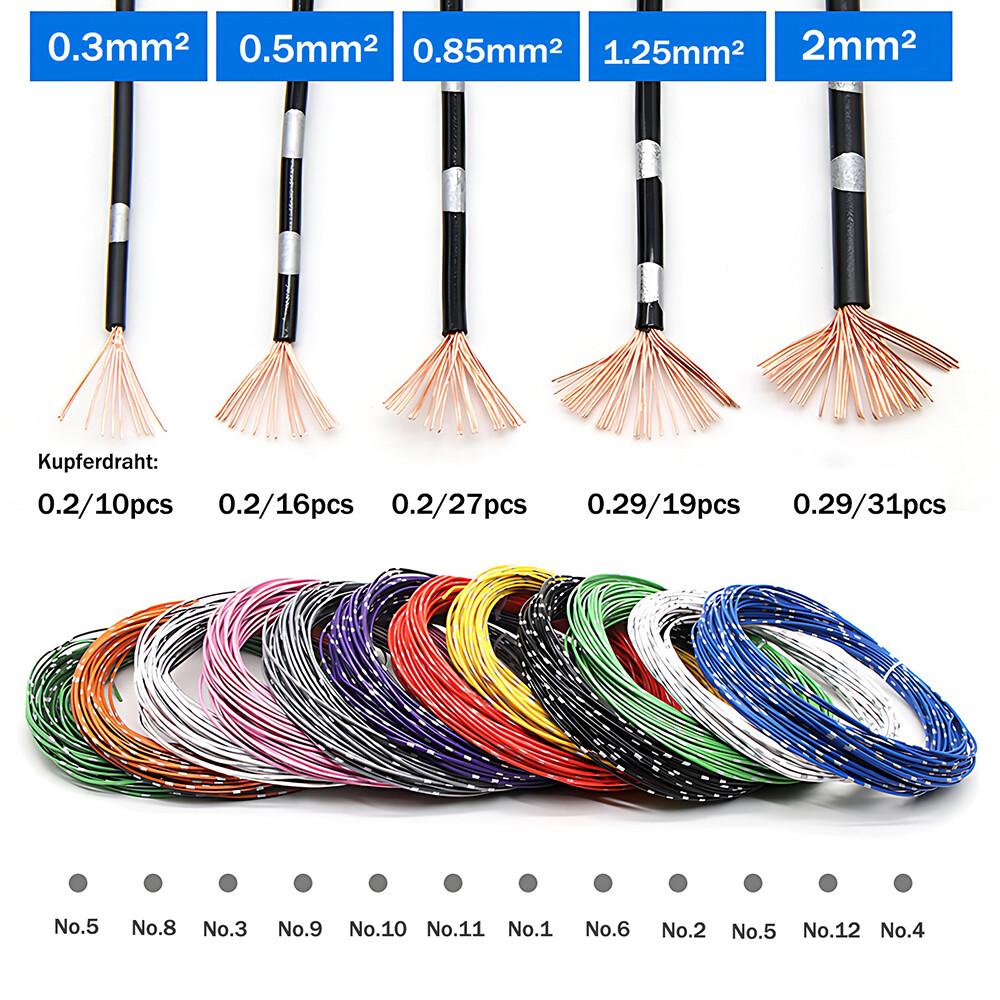
The conductor material and cross-sectional area affect current-carrying capacity, voltage drop, flexibility, and heat generation.
Before confirming a harness design, provide:
Conductor material and construction
Wire gauge or cross-sectional area
Rated voltage and current
Circuit length
Operating temperature
Installation environment
An undersized conductor may experience excessive voltage drop or overheating under the specified operating conditions. Wire selection should therefore be based on electrical load, routing, ambient temperature, bundling, and the relevant vehicle design requirements.
3.2 Insulation and Protective Materials
Automotive harnesses may use PVC, XLPE, silicone, or other insulation materials depending on their application.
The correct choice depends on:
Operating and peak temperature
Oil, fuel, and chemical exposure
Abrasion resistance
Flexibility and bending requirements
Flame performance requirements
Environmental aging conditions
For EU-related projects, buyers should also request relevant material information for insulation, tapes, sleeves, and connector housings. A declaration covering one material does not automatically establish the compliance status of every component in the finished harness.
3.3 Connectors and Terminals
Connector compatibility is essential for reliable installation and electrical performance.
The buyer should confirm:
Connector manufacturer and part number
Pin quantity and terminal arrangement
Terminal plating and material
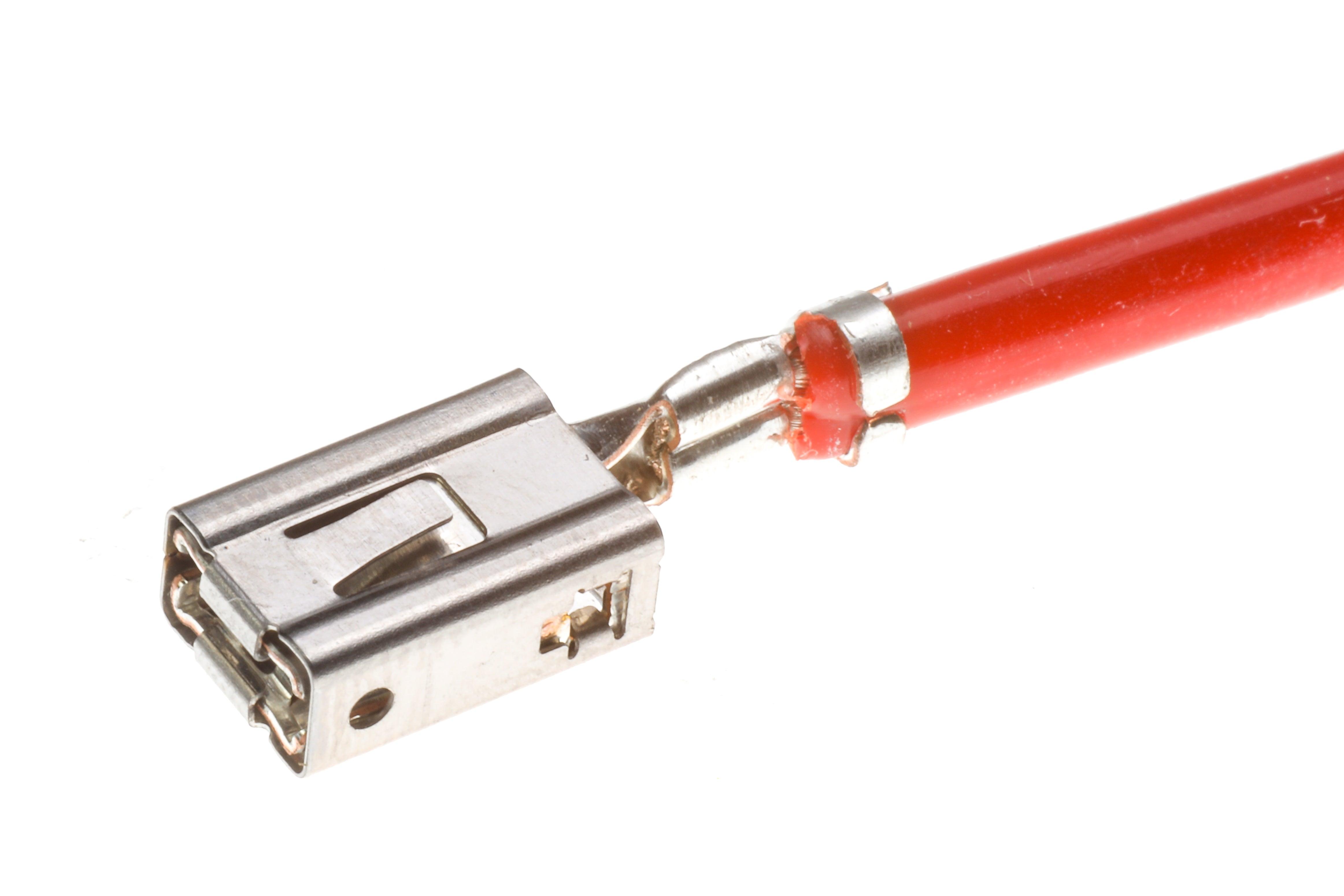
Wire-to-terminal compatibility
Locking and retention structure
Required sealing or waterproof performance
Mating connector compatibility
If a replacement connector is proposed, the supplier should obtain buyer approval before changing the design.
3.4 Harness Structure and Routing
Harness length, branch positions, connector orientation, and protective components should follow the vehicle's installation layout.
For complex assemblies, a clear drawing or sample helps reduce dimensional errors and unnecessary production revisions.
The following information is useful when requesting a quotation:
| Technical item | Information to confirm |
|---|---|
| Harness drawing | 2D drawing, 3D data, or reference sample |
| Wire specification | Type, gauge, conductor, insulation |
| Circuit information | Voltage, current, circuit function |
| Connector | Part number, pin count, terminal details |
| Harness dimensions | Overall length and branch lengths |
| Protection | Sleeves, corrugated tubes, tape, clips |
| Environment | Temperature, moisture, vibration, chemicals |
| Compliance | Applicable ELV, RoHS, OEM, and customer requirements |
| Testing | Electrical continuity, insulation, and other agreed tests |
| Documentation | Material declarations and available laboratory reports |
4. Which Automotive Applications May Require Custom Wiring Harnesses?
Different vehicle systems have different electrical and environmental requirements. A standard harness design may not be suitable for every project.
4.1 Passenger Vehicles
Passenger vehicles use wiring harnesses for lighting, sensors, switches, control units, door systems, dashboards, and other electrical functions.
For these applications, buyers should pay attention to connector compatibility, circuit identification, dimensional accuracy, and stable electrical connections.
4.2 Commercial Vehicles and Special-Purpose Vehicles
Commercial vehicles may operate under more demanding conditions, including extended operating hours, vibration, dust, moisture, and temperature variation.
A customized harness can be developed around the vehicle's installation space, electrical layout, and environmental requirements.
4.3 Electric and New Energy Vehicles
Electric vehicles contain low-voltage wiring harnesses as well as high-voltage cable assemblies.
High-voltage applications require additional attention to insulation systems, voltage ratings, connector compatibility, electrical protection, and applicable vehicle safety requirements.
A standard low-voltage harness should not be substituted for a high-voltage assembly without an engineering review.
4.4 Automotive Aftermarket and Replacement Parts
Importers and distributors may need custom harnesses for replacement parts, vehicle modifications, or specific vehicle models.
In these projects, accurate matching of connector types, wire lengths, pin assignments, and installation dimensions is essential. Buyers should also establish whether the part is being supplied as a vehicle component or as a separately marketed electrical product, since this may affect the applicable regulatory assessment.
5. How Can Buyers Evaluate an Automotive Wiring Harness Manufacturer?
Choosing an automotive wiring harness manufacturer requires more than checking whether the supplier can assemble wires and connectors.
A reliable supplier should be able to understand technical requirements, communicate material information, and maintain consistency between approved samples and production orders.
Consider the following purchasing checklist.
| Evaluation factor | Questions buyers should ask |
|---|---|
| Product customization | Can the supplier manufacture according to drawings or samples? |
| Material control | Can material specifications and supplier information be reviewed? |
| Compliance support | Can the supplier provide relevant declarations and available test reports? |
| Connector sourcing | Can the specified connector and terminal models be confirmed? |
| Engineering communication | Can technical questions and drawing revisions be handled clearly? |
| Sample approval | Can a pre-production sample be evaluated before batch production? |
| Quality inspection | Are inspection and test requirements defined for the project? |
| Traceability | Can material and production records be maintained as agreed? |
Documents Worth Requesting Before Ordering
Depending on the project and applicable regulations, buyers may request:
Product specification sheets
Approved drawings and wiring diagrams
Bill of materials (BOM)
Material declarations
Supplier declarations for relevant restricted substances
Third-party laboratory test reports
Connector and terminal specifications
Inspection records
Sample approval records
A third-party report should identify the tested sample, material or component, test method, test date, and laboratory. Buyers should check whether the report covers the actual materials used in the ordered harness.
A report for one PVC insulation sample, for example, does not automatically prove that the complete harness—including terminals, connector housings, tapes, and protective sleeves—meets every applicable requirement.
6. How Does Xiamen Evershine Support Custom Automotive Cable Harness Projects?
Xiamen Evershine Electronic Technology Co., Ltd. specializes in the development, production, and sales of wires, cables, and wiring harness products.
For buyers sourcing customized automotive cable assemblies, the company can support project requirements through drawing-based or sample-based customization, together with material compliance documentation according to the confirmed project scope.
6.1 Customization Based on Drawings or Samples
Different vehicle projects require different harness structures. Buyers can provide drawings, wiring diagrams, samples, or technical specifications as the basis for product evaluation.
Key customization details may include:
Wire type and cross-sectional area
Harness length and branch dimensions
Connector and terminal specifications
Pin configuration
Insulation and protective materials
Labeling and identification requirements
Packaging and delivery requirements
This approach helps align the proposed harness with the buyer's installation and electrical requirements before production.
6.2 RoHS-Related Material Control and Documentation
For projects requiring RoHS-related material control, Xiamen Evershine Electronic Technology Co., Ltd. can support the review of relevant material information and compliance documentation according to the agreed product scope.
Where applicable and available, supporting documents may include material declarations and third-party laboratory test reports.
For automotive applications, the compliance review should also consider ELV requirements and the vehicle manufacturer's restricted-substance specifications. Buyers should confirm the exact materials, substances, test scope, and documentation required before placing an order.
6.3 Sample Confirmation Before Batch Production
Sample evaluation is an important step in custom harness procurement.
Before approving mass production, buyers should check:
Wire specifications and dimensions
Connector and terminal compatibility
Pin assignments and circuit connections
Harness routing and branch positions
Insulation and protective materials
Electrical test results required by the project
Any changes to the approved BOM or material specification should be reviewed and authorized by the buyer.
6.4 Supporting More Efficient Supplier Communication
A clearly defined technical specification reduces misunderstandings between buyers and manufacturers.
By providing drawings, samples, material requirements, and testing expectations at the beginning of a project, buyers can make supplier evaluation more efficient and reduce the risk of repeated sample revisions.
For overseas customers, this also creates a clearer documentation trail for internal quality reviews and downstream customer approval.
7. How to Start Your Custom Automotive Wiring Harness Project
If you are an automotive OEM, auto parts importer, or wiring harness distributor looking for a qualified supplier, preparing the right information can help accelerate the quotation and sample process.
Before contacting a manufacturer, prepare the following:
Product application: Passenger vehicle, commercial vehicle, EV, special vehicle, or aftermarket replacement.
Technical drawing or sample: Include harness dimensions, branch positions, and connector details.
Electrical specifications: Provide voltage, current, wire gauge, and circuit requirements.
Material requirements: Identify insulation, connector, terminal, and protective material preferences.
Compliance requirements: Specify whether the project requires ELV, RoHS-related documentation, REACH information, OEM restricted-substance compliance, or other market-specific evidence.
Testing requirements: Define the electrical, mechanical, and environmental tests required.
Order information: Provide estimated quantity, target delivery schedule, and packaging requirements.
Xiamen Evershine Electronic Technology Co., Ltd. welcomes inquiries from automotive OEMs, importers, distributors, and wiring harness integrators seeking customized wire, cable, and harness solutions.
Contact the team with your drawings, samples, or project specifications to discuss a suitable product configuration and the supporting documentation required for your target market.
Frequently Asked Questions
Q1: Is every automotive wiring harness required to comply with the EU RoHS Directive?
No. The RoHS Directive excludes means of transport for persons or goods under Article 2(4)(f), with a specific exception for certain non-type-approved electric two-wheel vehicles. Components specifically designed for installation in excluded equipment may also be excluded under Article 2(4)(c). The actual product classification and intended use should be checked before making a compliance claim.
Q2: Does RoHS compliance mean an automotive cable harness meets all EU market access requirements?
No. RoHS addresses restricted substances in electrical and electronic equipment within its scope. Automotive components may instead be subject to the ELV Directive and other applicable vehicle, chemical, safety, and OEM requirements. A RoHS-related test report does not replace the complete regulatory assessment.
Q3: What hazardous substances are restricted under the EU ELV Directive?
The ELV Directive restricts lead, mercury, cadmium, and hexavalent chromium in vehicles, subject to the concentration limits and exemptions specified in the Directive and its Annex II.
Q4: Can Evershine manufacture a customized automobile cable harness according to drawings or samples?
Yes. Xiamen Evershine Electronic Technology Co., Ltd. supports customized wire, cable, and wiring harness projects based on customer drawings, samples, and confirmed technical specifications. Buyers should provide connector details, wire requirements, dimensions, and application information for evaluation.
Q5: Can a supplier's third-party test report prove that an entire wiring harness is compliant?
Not necessarily. A test report only supports the materials or samples included in its stated test scope. Buyers should check the tested sample, material coverage, test methods, laboratory details, and whether the report represents the components used in the ordered harness.
Q6: What information should I provide when requesting a quotation for a custom automotive wiring harness?
Provide the application, drawings or samples, wire specifications, connector part numbers, harness dimensions, electrical requirements, material restrictions, testing requirements, estimated order quantity, and delivery expectations. This information helps the manufacturer assess the project more accurately.
Conclusion
A well-documented RoHS car wiring harness can support material transparency and supplier quality management, but buyers should not treat RoHS as a universal legal approval for automotive components entering the EU.
For vehicle-related applications, it is essential to identify the applicable ELV requirements, OEM restricted-substance standards, and other market-specific obligations. Material declarations and third-party laboratory reports are useful supporting evidence when their scope matches the actual product.
When sourcing a customized automobile cable harness, working with an experienced automotive wiring harness manufacturer can help buyers coordinate product specifications, material information, sample approval, and production requirements more effectively.
Xiamen Evershine Electronic Technology Co., Ltd. is ready to discuss your custom wire, cable, and wiring harness requirements. Send your drawings or samples to start your next automotive cable harness project.