


Can High-Quality Motorcycle Wiring Harness Prevent Common Electrical Failures for All Motorcycle Applications?
2026-10-21 10:50For buyers sourcing a motorcycle wiring harness, the challenge is not simply finding wires and connectors that fit. The harness must also withstand vibration, moisture, temperature fluctuations, mechanical abrasion, and the electrical demands of the motorcycle throughout its intended service life.
Can a high-quality motorcycle wiring harness prevent common electrical failures across all motorcycle applications?
A properly engineered harness can significantly reduce wiring-related failures, provided that its materials, connectors, circuit design, assembly quality, and validation procedures match the application. However, no wiring harness can guarantee the prevention of every electrical fault, especially when failures originate from batteries, electronic control units, incorrect installation, or inadequate circuit protection.
Xiamen Evershine Electronic Technology Co., Ltd. specializes in the development, production, and sales of wires, cables, and wiring harness products. For motorcycle OEMs and aftermarket distributors, understanding the relationship between harness design and electrical reliability is an important first step toward specifying a suitable customized solution.
1. Why Do Motorcycle Wiring Harnesses Experience Electrical Failures?
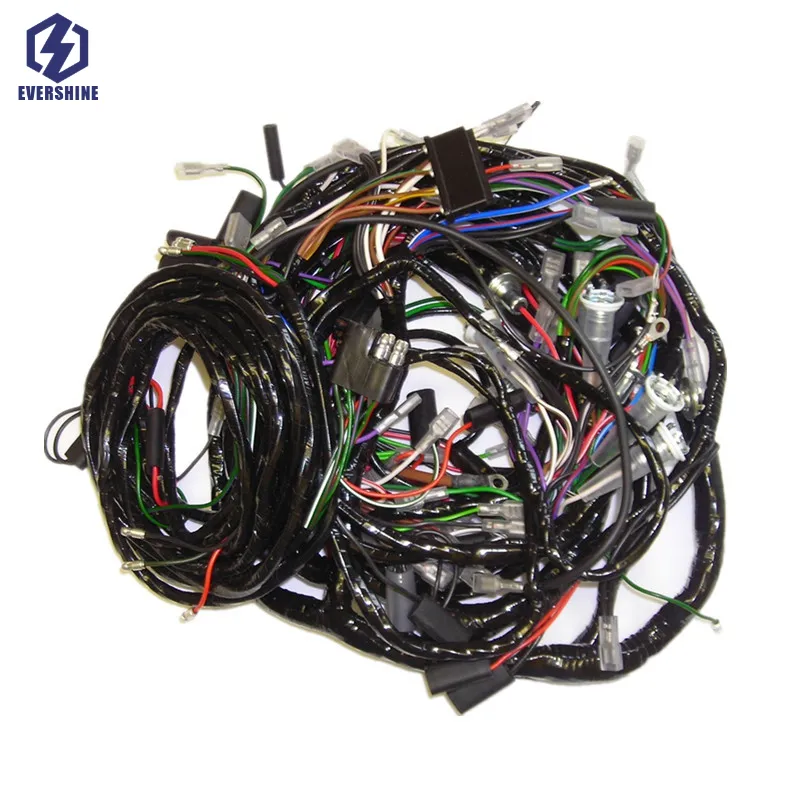
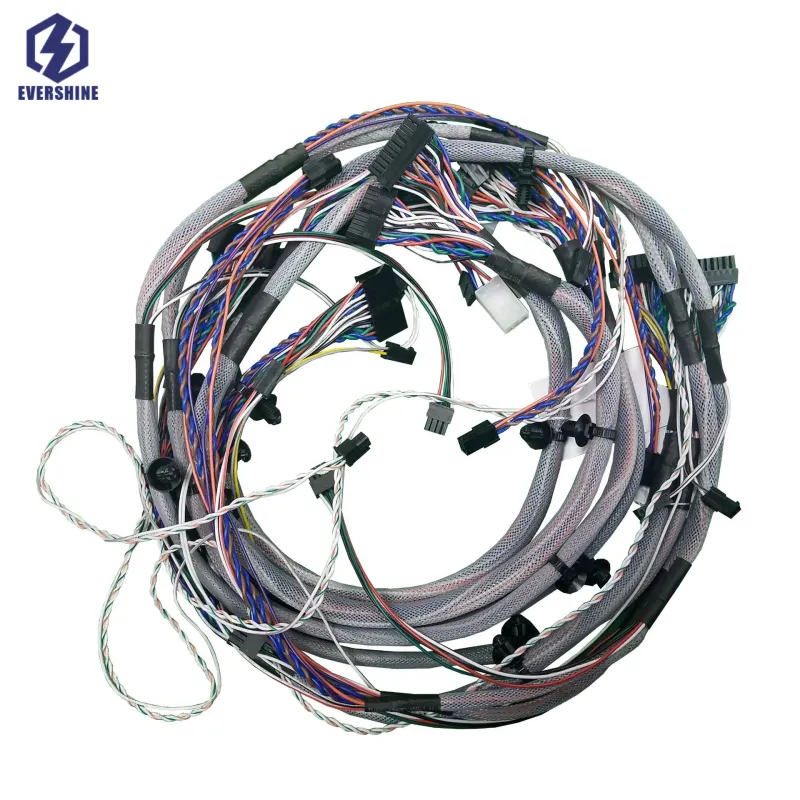
A motorcycle wiring harness connects electrical and electronic components through a network of wires, terminals, connectors, protective sleeves, and branch circuits. It may support the starting system, ignition, charging system, lighting, instruments, sensors, and auxiliary accessories.
Because motorcycles operate in exposed and often vibration-intensive environments, the harness must meet both electrical and mechanical requirements.
1.1 Vibration can loosen connections and damage conductors
Engine vibration, road impacts, and repeated steering movement can place stress on wires and connector interfaces. If the harness is routed incorrectly or a terminal is inadequately crimped, repeated movement may contribute to connection instability or conductor fatigue.
Typical warning signs include intermittent lighting, unstable instrument readings, charging interruptions, and electrical accessories that stop working when the motorcycle moves.
A suitable design should consider connector locking, terminal retention, branch length, cable flexibility, strain relief, and the movement of the steering assembly.
1.2 Water ingress can cause corrosion and intermittent faults
Rainwater, road spray, humidity, and vehicle washing can expose electrical interfaces to moisture. If water reaches an inadequately protected connector, corrosion or contamination may increase contact resistance and interfere with electrical performance.
For motorcycles used in wet climates or off-road conditions, connector selection should reflect the actual exposure risk. Seals, cable-entry interfaces, connector mating conditions, and unused terminal positions also require attention.
A waterproof connector alone does not guarantee that the complete harness is waterproof. The entire assembly and its installation conditions must be considered.
1.3 High temperatures can accelerate insulation aging
Wires installed near engines, exhaust systems, voltage regulators, and other heat-generating components may experience elevated temperatures.
When insulation is unsuitable for the application, prolonged heat exposure can accelerate hardening, cracking, deformation, or loss of electrical performance. Damaged insulation may eventually expose conductors and increase the risk of short circuits.
The appropriate cable specification should account for the expected temperature range, current load, installation route, and proximity to heat sources.
1.4 Poor crimping can increase contact resistance
A terminal crimp creates the electrical and mechanical connection between a conductor and a terminal. Incorrect tooling, incompatible terminals, unsuitable wire-stripping dimensions, or inconsistent crimping can compromise this connection.
Excessive contact resistance can create localized heating, voltage drop, and intermittent operation.
For motorcycle manufacturers purchasing harnesses in volume, supplier process controls and crimp-quality verification are important indicators of manufacturing consistency.
1.5 Incorrect wire sizing can cause voltage drop and overheating
Conductor size must be matched to the circuit's current, length, duty cycle, ambient temperature, and installation conditions.
An undersized wire may experience excessive voltage drop or temperature rise under load. These problems can affect lighting, starting circuits, accessories, and other electrical functions.
Selecting wire solely by appearance or outside diameter is therefore insufficient. Buyers should specify conductor cross-sectional area and the applicable electrical requirements.
2. How Should Buyers Choose a Reliable Motorcycle Wiring Harness?
The right harness should match the motorcycle's electrical architecture and operating environment. A standard replacement harness may be suitable for an established model with a confirmed part number, while a new motorcycle platform or custom conversion may require a harness developed from engineering drawings.
2.1 Select wires according to electrical and environmental requirements
Copper conductors are commonly used in vehicle wiring because of their electrical conductivity and established automotive applications. The conductor construction and cross-sectional area should be selected according to the circuit's electrical load and mechanical requirements.
Insulation materials should be evaluated for:
Rated operating temperature.
Flexibility and bending requirements.
Abrasion resistance.
Exposure to oil, fuel, cleaning chemicals, or other relevant substances.
Compatibility with the connector and sealing system.
PVC and other suitable automotive wire insulation systems may be considered depending on the specification. No single insulation material is automatically the best choice for every motorcycle circuit.
2.2 Choose connectors that match the installation environment
Connector selection should consider terminal compatibility, current capacity, pin configuration, retention, sealing, and available installation space.
For moisture-prone locations, buyers should specify the required ingress protection and the conditions under which the rating must be maintained. For example, the required protection may differ between a connector under the seat and an interface exposed to road spray.
The complete connector system—including terminals, seals, cable entries, and mating components—must be compatible.
2.3 Confirm the circuit layout and pin assignments
A harness can contain high-quality materials and still fail if the pin assignments, branch lengths, or circuit connections are incorrect.
Before production, buyers should confirm the wiring diagram, connector part numbers, terminal positions, wire colors, branch dimensions, and electrical functions.
For replacement and aftermarket applications, a reference harness can be useful, but it should be checked against the electrical diagram whenever possible.
2.4 Match the harness to the motorcycle platform
Different motorcycles may have different electrical systems, installation spaces, connector interfaces, and accessory requirements.
A harness designed for a commuter scooter should not automatically be assumed suitable for an off-road motorcycle, touring motorcycle, or electric motorcycle.
For OEM projects, the preferred approach is to develop the harness around the approved vehicle design and bill of materials. For aftermarket applications, compatibility should be confirmed by model, model year, variant, and part number.
3. Which Technical Parameters Should Be Included in a Motorcycle Harness RFQ?
A detailed request for quotation (RFQ) allows the supplier to evaluate the design more accurately and reduces misunderstandings during sample development.
| Technical parameter | Information buyers should provide | Procurement purpose |
|---|---|---|
| Motorcycle application | Model, model year, vehicle type, and intended use | Establishes the operating environment and compatibility requirements |
| System voltage | Nominal system voltage and relevant circuit requirements | Defines the electrical design basis |
| Current requirements | Continuous current, peak current, duty cycle, and circuit protection | Supports wire sizing and thermal assessment |
| Conductor specification | Material, cross-sectional area, and construction | Helps control resistance and current-carrying performance |
| Insulation | Material, temperature rating, and environmental resistance | Supports durability under operating conditions |
| Connector specification | Manufacturer, part number, pin count, terminal type, and mating interface | Reduces compatibility and assembly errors |
| Harness dimensions | Overall length, branch lengths, connector orientation, and routing | Supports installation and production assembly |
| Environmental protection | Water exposure, dust, humidity, chemicals, and target IP rating where applicable | Defines relevant sealing and environmental requirements |
| Mechanical protection | Vibration, abrasion, bend radius, strain relief, clips, and protective sleeves | Helps prevent mechanical damage |
| Electrical testing | Continuity, pin mapping, short-circuit checks, and other specified tests | Verifies the finished assembly against the approved design |
| Quality documentation | Drawings, bill of materials, inspection records, and traceability requirements | Supports incoming inspection and repeat-order consistency |
| Order requirements | Prototype quantity, forecast volume, packaging, labeling, and delivery schedule | Supports production planning and commercial evaluation |
The exact requirements depend on the application. A simple lighting sub-harness may need a different test plan from a complete engine-management harness or a high-current electric motorcycle assembly.
Buyers should identify mandatory requirements separately from optional preferences so the supplier can prepare an accurate quotation.
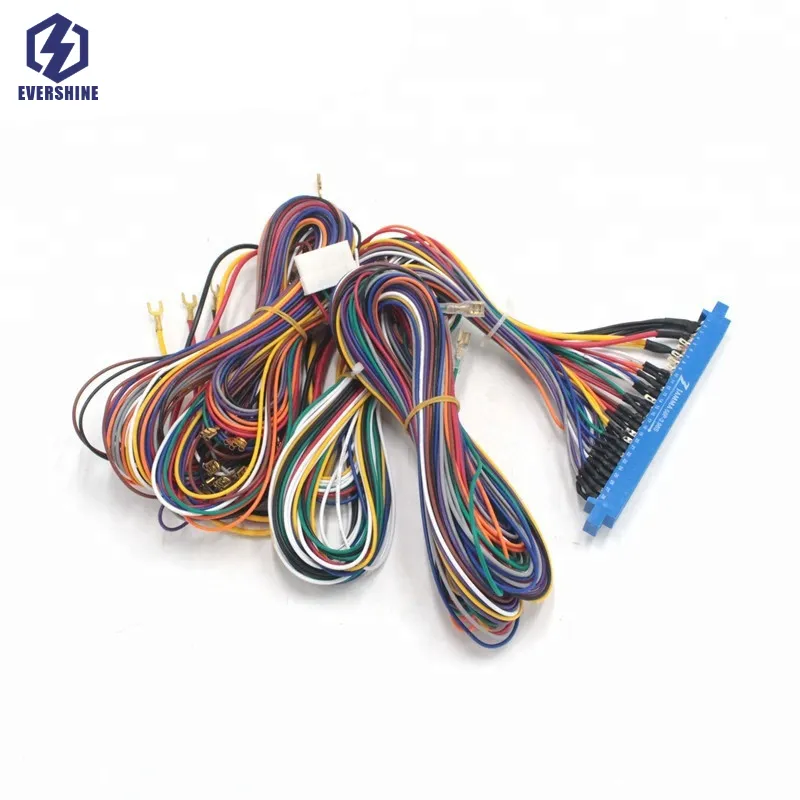
4. Which Motorcycle Applications Need Different Harness Designs?
A reliable motorcycle electrical harness should reflect the electrical architecture and operating environment of the target motorcycle.
4.1 Commuter motorcycles and scooters
Common electrical functions include starting, charging, lighting, instrumentation, ignition or engine management, and auxiliary circuits.
For these products, manufacturers often need repeatable assembly dimensions, accurate connector interfaces, stable electrical performance, and consistent production quality.
A customized harness can be specified to match the approved vehicle layout and assembly process.
4.2 Off-road and adventure motorcycles
Off-road applications may involve greater exposure to shock, vibration, mud, water spray, dust, and repeated movement.
Relevant design considerations include protective sleeving, secure connector retention, abrasion-resistant routing, suitable seals, and strain relief at moving or exposed locations.
The required protection should be based on the intended conditions and confirmed through an appropriate validation plan.
4.3 Touring motorcycles and accessory systems
Touring motorcycles may incorporate additional lighting, navigation systems, communication equipment, heated accessories, and auxiliary power outlets.
Adding accessories can change the electrical load. Buyers should verify conductor sizing, fuse ratings, connector capacity, grounding, and available circuit capacity before approving an updated harness.
A new accessory should not be connected to an existing circuit without confirming that the circuit is designed to support it.
4.4 Custom motorcycles and aftermarket replacement harnesses
Custom builds and aftermarket modifications may require different wire lengths, connector interfaces, circuit branches, or component compatibility.
A customized automotive wiring harness for motorcycle applications can help integrate these requirements into a defined assembly, provided that the electrical design and interfaces are confirmed.
Distributors should specify compatible vehicle models, model years, variants, connector part numbers, and any installation differences to reduce returns caused by fitment errors.
4.5 Electric motorcycles
Electric motorcycles may contain low-voltage control harnesses as well as separate high-voltage power connections.
These are different design categories. High-voltage circuits require suitable insulation, connectors, electrical protection, and validation based on the system's voltage and operating conditions.
Buyers should clearly identify whether the requested product is a low-voltage control harness, a battery-related assembly, a motor connection, or another type of electrical connection.
5. Which Tests Help Verify Motorcycle Wiring Harness Quality?
Testing should be based on the product specification, risk assessment, and applicable customer or regulatory requirements. The following checks are useful starting points for supplier qualification.
| Test or inspection | What it verifies | Buyer consideration |
|---|---|---|
| Continuity testing | Confirms that specified electrical paths are connected | Ensure all required circuits are covered |
| Pin-to-pin mapping | Confirms that connector terminals match the wiring diagram | Verify the approved connector and circuit configuration |
| Short-circuit testing | Detects unintended connections between circuits or test points | Define the required test coverage |
| Conductor resistance measurement | Checks resistance against specified limits | Confirm the method and acceptance criteria |
| Crimp inspection | Evaluates terminal attachment and workmanship | Confirm applicable crimp dimensions and inspection methods |
| Terminal pull testing | Evaluates mechanical retention of the crimped connection | Use criteria appropriate to the terminal and conductor |
| Water-ingress testing | Evaluates the specified connector or assembly configuration | Define the required protection rating and test setup |
| Thermal aging | Evaluates changes after defined heat exposure | Specify temperature, duration, and post-test acceptance criteria |
| Vibration testing | Evaluates mechanical durability under specified vibration conditions | Use a representative test profile for the application |
| Abrasion assessment | Evaluates resistance to rubbing and contact damage | Focus on realistic cable-routing conditions |
A continuity test alone cannot prove that a harness will withstand rain, vibration, or prolonged heat exposure. Similarly, a waterproof connector rating does not establish that every part of the installed harness is protected against water ingress.
Where a project requires a complete validation package, the test plan should identify the test item, procedure, acceptance criteria, responsible laboratory or facility, and documentation required for approval.
Suppliers should only claim testing capabilities and completed results that can be supported by actual records.
6. How Can Buyers Reduce Motorcycle Wiring Harness Procurement Risks?
For OEMs and aftermarket distributors, a structured purchasing process can reduce compatibility problems, sample delays, and avoidable quality issues.
Confirm technical compatibility before requesting a final quotation
Provide the wiring diagram, connector part numbers, wire specifications, harness dimensions, and application details. If some information is unavailable, identify the missing items so they can be resolved during engineering review.
Evaluate the complete assembly, not just the cable
A wiring harness includes multiple components and manufacturing steps. Buyers should review wire quality, connector compatibility, terminal crimping, sealing, routing protection, and final electrical verification together.
Approve samples against defined criteria
Before mass production, confirm the sample's dimensions, connector interfaces, pin assignments, and electrical performance. Record any approved deviations and ensure that the final production version matches the approved documentation.
Request evidence for quality and compliance claims
Ask for applicable inspection records, test reports, and material documentation. Confirm that the evidence relates to the actual product and configuration being purchased.
Agree on change control and repeat-order requirements
Changes to wires, terminals, connectors, seals, or assembly processes can affect fit and performance. Establish a process for reviewing and approving such changes before implementation.
For distributors, maintaining clear part numbers and revision records also helps reduce the risk of supplying an incompatible replacement harness.
7. How Can Xiamen Evershine Electronic Technology Co., Ltd. Support Customized Motorcycle Wiring Harness Projects?
For motorcycle OEMs and aftermarket parts distributors, a suitable supplier should be able to review the customer's requirements and translate them into an agreed production specification.
Xiamen Evershine Electronic Technology Co., Ltd. specializes in wire, cable, and wiring harness development, production, and sales. Customers can provide drawings, wiring diagrams, reference samples, connector specifications, or a bill of materials to support project evaluation.
A customized project can follow these steps.
Step 1: Application and requirement review
Identify the motorcycle platform, electrical functions, target market, operating environment, estimated order volume, and applicable customer specifications.
Step 2: Wire and connector specification review
Confirm the conductor, insulation, terminal, connector, sealing, and protective component requirements. Resolve interface questions before sample production.
Step 3: Drawing confirmation and prototype development
Define branch lengths, pin assignments, connector orientation, wire identification, and installation dimensions. Use approved drawings and reference samples to establish the required configuration.
Step 4: Testing and acceptance planning
Agree on the electrical checks and any additional mechanical or environmental validation required for the project. Define acceptance criteria before production so the buyer and supplier share the same expectations.
Step 5: Production and quality inspection
Manufacture the assembly according to the approved specification and apply the agreed quality checks. Maintain the necessary product identification and documentation for the order.
Step 6: Packaging and export delivery
Confirm labeling, packaging, shipping requirements, and the accompanying documentation. Any certification, declaration, or test report should correspond to the actual product and applicable market requirements.
For repeat business, maintaining approved specifications and clear revision control helps support more consistent purchasing and production planning.
8. Frequently Asked Questions About Motorcycle Wiring Harnesses
Q1: Can a high-quality motorcycle wiring harness prevent all electrical failures?
No. It can reduce wiring-related risks associated with poor connections, unsuitable wire sizing, insulation damage, and inadequate environmental protection. It cannot eliminate every fault caused by other electrical components, incorrect installation, overloading, or maintenance problems.
Q2: Which wire is best for a motorcycle wiring harness?
The appropriate wire depends on the circuit's current, temperature, flexibility, chemical exposure, and installation conditions. Copper conductors are commonly used, but the required conductor construction and insulation specification should be determined by the engineering requirements rather than a universal material preference.
Q3: Is an IP67 connector sufficient for every motorcycle application?
Not necessarily. The required IP rating depends on the connector location and exposure conditions. The rating also applies to a defined configuration and test method. Buyers should confirm whether the complete assembly needs additional water-ingress testing.
Q4: What causes motorcycle wiring harness insulation to deteriorate?
Common contributors include excessive heat, abrasion, chemical exposure, inappropriate material selection, aging, and mechanical stress. Suitable cable specifications and routing protection can help reduce these risks.
Q5: Can a supplier customize a motorcycle harness from an existing sample?
A sample can provide useful information about dimensions and interfaces. However, a wiring diagram, pin assignments, connector part numbers, and electrical specifications are also valuable because a physical sample may not reveal every circuit function.
Q6: What should motorcycle parts distributors confirm before placing a bulk order?
Distributors should confirm vehicle compatibility, model year, connector interfaces, part numbers, packaging, labeling, sample approval, quality documentation, and the process for handling engineering changes.
Q7: Can the same wiring harness be used for different motorcycle models?
Only when compatibility has been verified. Models may differ in circuit layout, connectors, wire lengths, mounting points, and accessory configurations. A shared design should be approved against the relevant technical documentation before being sold as compatible.
9. Request a Customized Motorcycle Wiring Harness
A reliable motorcycle electrical system starts with a harness designed around the correct wire specifications, connector interfaces, terminal connections, environmental conditions, and electrical requirements.
For motorcycle manufacturers, aftermarket distributors, and custom vehicle brands, careful supplier evaluation and sample validation can help reduce preventable wiring faults and improve production consistency.
Xiamen Evershine Electronic Technology Co., Ltd. welcomes inquiries for customized wire, cable, and wiring harness solutions based on customer drawings and project specifications.
To help evaluate your requirements, please provide:
Motorcycle type, model, and intended application.
Wiring diagram, reference sample, or existing part number.
Required wire specifications and connector details.
Operating temperature and environmental exposure.
Required electrical and environmental tests.
Estimated order quantity and target delivery schedule.
Visit www.xm-evershine.com to discuss your project and request a customized wiring harness solution for your motorcycle manufacturing or distribution business.