

Why Are High-Voltage Wiring Harnesses Critical Components for New Energy Vehicle Systems?
2026-10-17 18:37As electric vehicles and new energy equipment continue to develop, high-voltage wiring harnesses have become essential components for safe and reliable power transmission. From electric passenger vehicles and commercial EVs to battery energy storage systems and charging equipment, high-voltage electrical connections must meet demanding requirements for insulation performance, temperature resistance, electrical safety, and electromagnetic compatibility.
For new energy vehicle manufacturers, automotive component suppliers, and electrical equipment integrators, selecting the right new energy wiring harness is not simply a matter of choosing a cable with the correct voltage rating. The complete assembly must match the electrical architecture, installation environment, connector specifications, and applicable safety requirements of the finished equipment.
A poorly matched harness may increase the risk of insulation breakdown, excessive temperature rise, electromagnetic interference, connection failure, or costly maintenance.
So, what should buyers evaluate when sourcing a high-voltage wire harness for new energy applications?
This guide explains the key technical considerations, typical application scenarios, procurement requirements, and customization options available from Xiamen Evershine Electronic Technology Co., Ltd.

1. What Is a High-Voltage Wiring Harness?
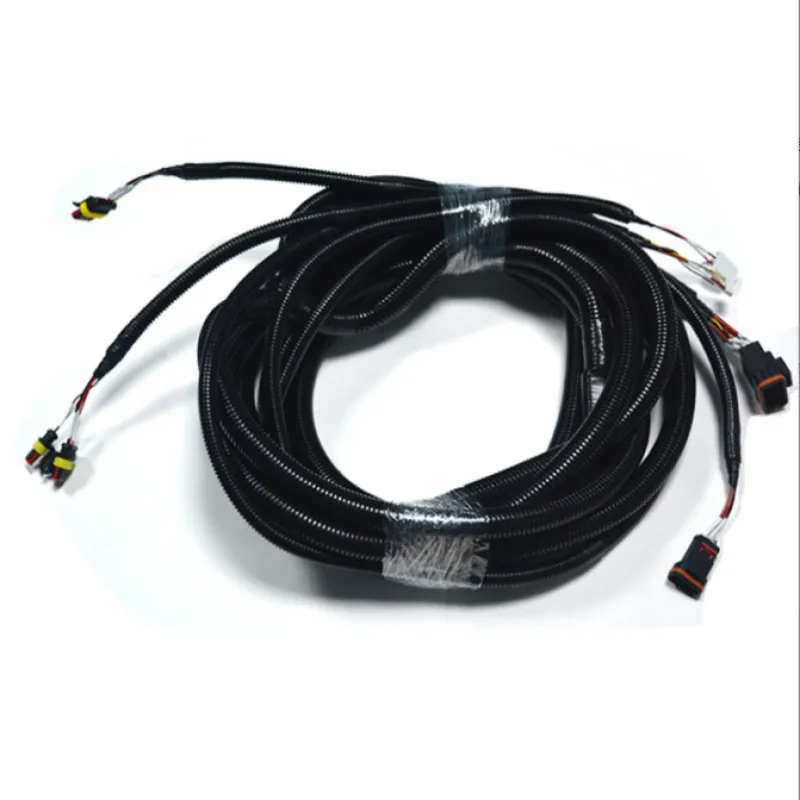
A high-voltage wiring harness is an electrical assembly designed to transmit power between high-voltage components within an electric vehicle or other electrical system.
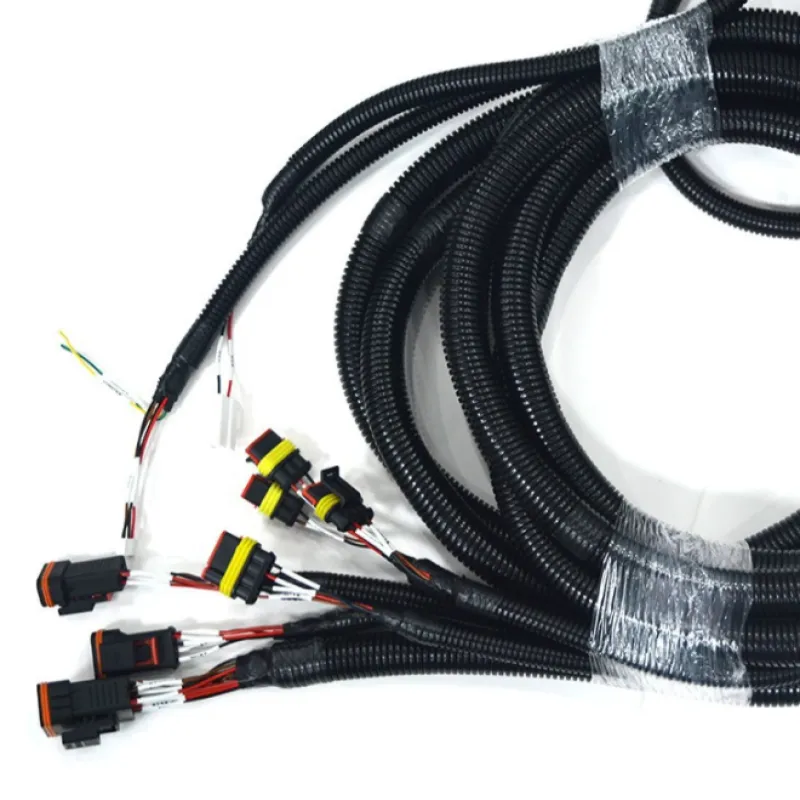
A typical EV high voltage harness may include:
High-voltage cables with appropriately rated insulation
High-voltage connectors and terminals
Shielding structures where required
Sealing components
Protective sleeves or conduits
Cable fixation and strain-relief components
Customized branch connections
Identification labels and safety markings
Unlike ordinary low-voltage wiring, high-voltage assemblies must be selected and manufactured according to the electrical and environmental demands of their intended application.
In electric vehicles, the harness may connect the battery pack to the power distribution unit, inverter, electric drive system, onboard charger, or DC-DC converter.
The specific configuration depends on the vehicle architecture and the requirements of the equipment manufacturer.
The purpose of a high-voltage harness is to provide reliable power transmission while maintaining the required electrical insulation, mechanical protection, and environmental performance throughout its intended service life.
2. Why Are High-Voltage Harnesses Critical for New Energy Vehicles?
New energy vehicles rely on coordinated electrical systems to convert, distribute, and manage energy.
The high-voltage wiring harness connects major power components and helps ensure that electrical energy reaches the correct destination.
Its importance can be understood through four main functions.
2.1 Reliable High-Voltage Power Transmission
Electric vehicles use high-voltage systems to transfer energy between the battery, inverter, electric motor, and other power electronics.
The conductor cross-sectional area, cable resistance, current rating, connector performance, and operating conditions must be considered together.
An undersized conductor or unsuitable connection may result in excessive voltage drop or temperature rise.
2.2 Electrical Insulation and Safety
High-voltage circuits require insulation suitable for the specified working voltage, transient conditions, temperature range, and installation environment.
The insulation system must be designed to help prevent unintended electrical contact and insulation failure.
2.3 Thermal Stability
High-voltage cables can experience significant heating depending on current, conductor resistance, ambient temperature, installation conditions, and cooling.
A suitable cable must maintain its specified electrical and mechanical properties within its rated temperature range.
2.4 Electromagnetic Compatibility
Power electronics can generate electromagnetic noise during switching and operation.
Where required, shielded high-voltage cables and properly designed termination structures can help control electromagnetic emissions and improve system compatibility.
These requirements make the high voltage wire harness a critical component of the vehicle's overall electrical design.
3. Key Technical Requirements When Selecting an EV High Voltage Harness
3.1 Voltage Rating and Insulation Performance
The first step is to confirm the system's maximum operating voltage and applicable electrical requirements.
Buyers should specify:
Nominal system voltage
Maximum operating voltage
Required insulation performance
Applicable dielectric test requirements
Transient or surge conditions where relevant
Required electrical clearances and creepage distances at the assembly level
The cable's rated voltage alone does not establish the compliance of the complete harness.
Connectors, terminals, joints, seals, and assembly structures must also be suitable for the intended electrical conditions.
For automotive applications, the design and validation process should follow the applicable vehicle standards and customer requirements.
3.2 High-Temperature Resistance
High-voltage wiring may be installed near batteries, electric motors, inverters, power distribution units, or other heat-generating components.
The appropriate cable temperature rating depends on the maximum conductor temperature, ambient conditions, current load, routing, and thermal exposure.
Before ordering, buyers should confirm:
Continuous operating temperature
Short-term temperature exposure
Temperature cycling requirements
Insulation material
Thermal aging requirements
Installation proximity to heat sources
Do not select a cable based solely on a general description such as "heat-resistant."
The actual temperature rating and applicable test evidence should be confirmed in the technical specification.
3.3 Shielding and Electromagnetic Compatibility
Shielding is an important consideration for many EV power circuits, particularly where high-voltage switching systems operate near sensitive electronic components.
Depending on the system design, a harness may use braided shielding, foil shielding, or another specified shielding structure.
Procurement teams should clarify:
Whether shielding is required
Shield coverage or construction
Shield termination method
Connector shielding compatibility
Grounding and bonding requirements
Applicable EMC test criteria
A shielded cable does not automatically guarantee electromagnetic compatibility. The effectiveness of the complete installation also depends on routing, connector interfaces, termination quality, and the vehicle's overall grounding strategy.
3.4 Mechanical Protection and Flexibility
Vehicle wiring must accommodate packaging constraints, assembly operations, and movement during service.
Depending on the installation location, the harness may need to withstand vibration, abrasion, bending, moisture, and exposure to automotive fluids.
Important design considerations include:
Cable flexibility
Minimum bend radius
Abrasion resistance
Strain relief
Protective sleeving
Connector locking
Fixing points
Routing clearance
A well-designed new energy wiring harness should match the physical installation environment instead of being selected only by its electrical specifications.
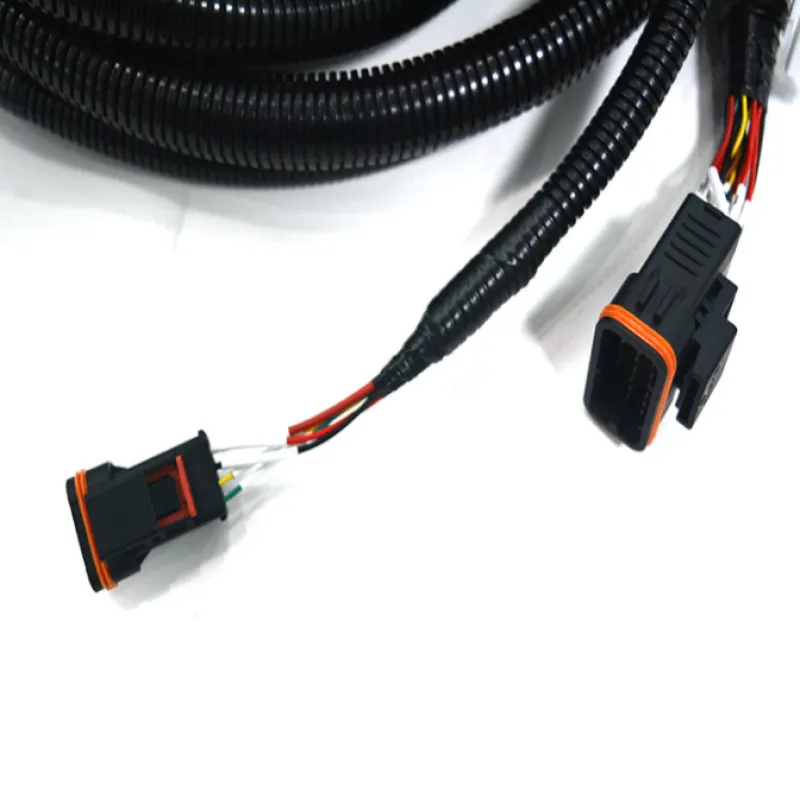
4. Where Are High-Voltage Wiring Harnesses Used?
High-voltage harnesses are used in several new energy vehicle and power equipment applications.
| Application | Typical Harness Function | Key Considerations |
|---|---|---|
| Electric vehicle battery pack | Transfers power to the vehicle's high-voltage distribution system | Insulation, connector compatibility, temperature |
| Battery and power distribution unit | Connects high-voltage distribution components | Current rating, terminal performance, electrical safety |
| Inverter and electric drive | Connects power electronics and drive components | Temperature, shielding, vibration |
| Onboard charger | Connects charging-related power circuits | Voltage rating, thermal performance, insulation |
| DC-DC converter | Supports high-voltage power conversion connections | Current requirements, connection reliability |
| Electric commercial vehicles | Connects high-voltage components across larger vehicle platforms | Cable routing, mechanical protection, durability |
| Charging equipment | Connects specified power components | Electrical ratings, thermal management, applicable safety requirements |
| Battery energy storage systems | Connects high-voltage electrical components | Insulation, protection, environmental suitability |
The exact harness construction varies by application. A cable suitable for one location should not automatically be assumed suitable for another.
5. How Should Buyers Evaluate High-Voltage Harness Specifications?
A clear RFQ helps suppliers select appropriate materials, connectors, and production processes.
The following parameters should be confirmed before prototype development.
| Parameter | Information to Confirm |
|---|---|
| Application | EV, commercial vehicle, charging equipment, or energy storage |
| Voltage | Nominal and maximum operating voltage |
| Current | Continuous and peak current requirements |
| Conductor | Material and cross-sectional area |
| Cable construction | Single-core or multi-core configuration |
| Temperature | Operating range and thermal exposure |
| Insulation | Material and required performance |
| Shielding | Required construction and termination |
| Connector | Exact part number and mating interface |
| Length | Overall length and dimensional tolerance |
| Routing | Bend radius, branch locations, and fixing requirements |
| Environmental protection | Moisture, dust, abrasion, vibration, and chemical exposure |
| Testing | Electrical, mechanical, and environmental test requirements |
| Compliance | Applicable standards and customer specifications |
| Quantity | Prototype, pilot production, and forecast volume |
Providing a drawing, wiring diagram, connector part number, or physical sample can help reduce misunderstandings during the quotation and engineering review stages.
6. Common Procurement Problems and How to Avoid Them
Problem 1: The Cable Meets the Voltage Requirement but Fails in Service
A cable's nominal voltage rating does not establish that the complete assembly is suitable for every operating condition.
Recommended approach: Review current, temperature, insulation requirements, connector ratings, installation conditions, and applicable validation requirements together.
Problem 2: The Harness Overheats During Operation
Excessive temperature rise may result from conductor undersizing, high contact resistance, inadequate connection design, or installation conditions that restrict heat dissipation.
Recommended approach: Confirm conductor sizing, current requirements, terminal compatibility, contact performance, and thermal validation criteria.
Problem 3: Electromagnetic Interference Affects Nearby Electronics
Inadequate shielding termination or unsuitable cable routing can contribute to EMC problems.
Recommended approach: Define shielding requirements and validate the complete cable assembly within the intended electrical system.
Problem 4: The Connector Does Not Match the Equipment
A visually similar connector may have a different keying arrangement, terminal configuration, or electrical rating.
Recommended approach: Confirm the exact connector part number, mating interface, terminal specification, and pin assignment before sampling.
Problem 5: Prototype Quality Does Not Match Mass Production
Variations in materials, crimping, assembly, or inspection can lead to inconsistent production results.
Recommended approach: Establish an approved drawing, BOM, process parameters, inspection plan, and batch traceability requirements before mass production.
7. What Testing Should a High-Voltage Harness Supplier Provide?
Testing requirements should be determined by the application, relevant standards, and customer specifications.
Depending on the design, verification may include the following.
Electrical Tests
Continuity testing
Conductor resistance measurement where required
Insulation resistance testing
Dielectric withstand testing where applicable
High-voltage isolation or leakage-related checks as specified
Pinout and connection verification
Mechanical Tests
Terminal retention or pull-force testing
Connector locking verification
Dimensional inspection
Strain-relief evaluation
Abrasion or vibration testing where required
Environmental Tests
Thermal aging
Temperature cycling
Moisture or ingress testing
Fluid resistance testing where applicable
Other application-specific environmental tests
Shielding and EMC Verification
For shielded assemblies, the project may require checks of shield continuity, termination integrity, or system-level EMC performance.
Not every test applies to every product. The supplier and customer should agree on test methods, acceptance criteria, sampling frequency, and documentation before production begins.
A reliable quality claim should be supported by defined test procedures and recorded results, not by a general statement that the product has been tested.
8. Which Standards and Compliance Requirements Should Buyers Check?
High-voltage harness procurement may involve multiple standards and customer-specific requirements.
Depending on the application and target market, buyers may need to consider:
ISO 6722 or ISO 19642 series, where applicable to the relevant automotive cable specification
LV 216, where required by the vehicle manufacturer's specification for high-voltage cable assemblies
ISO 16750 series, for relevant environmental conditions and testing of road-vehicle electrical and electronic equipment
UNECE R100, where applicable to vehicle electric powertrain safety requirements
RoHS, where applicable to the product and market
Customer-specific validation, quality, and traceability requirements
These standards and regulations do not all apply to every cable assembly, and they address different aspects of product performance or vehicle safety.
Procurement teams should identify the standards required for their exact application and verify that the proposed product, test evidence, and supplier documentation satisfy those requirements.
9. How Xiamen Evershine Electronic Technology Co., Ltd. Supports Custom Harness Projects
For new energy equipment manufacturers and automotive component buyers, supplier selection should consider material evaluation, engineering communication, manufacturing control, and testing capability.
Xiamen Evershine Electronic Technology Co., Ltd. specializes in the research and development, manufacturing, and supply of wires, cables, and wiring harness products.
For customized high-voltage harness projects, the company can evaluate customer requirements based on available drawings, samples, wiring diagrams, and technical specifications.
Depending on the project scope, customization may involve:
Cable type and conductor size
Wire length and assembly configuration
Connector and terminal specifications
Insulation and protective components
Shielding requirements where applicable
Branch layout and installation dimensions
Electrical and mechanical inspection requirements
The final design should be confirmed against the customer's application, applicable standards, and required validation plan.
A Practical Customization Workflow
Step 1 — Requirement review
The customer provides a drawing, sample, BOM, wiring diagram, or technical specification.
Step 2 — Technical evaluation
The requirements for voltage, current, temperature, connectors, shielding, routing, and protection are reviewed.
Step 3 — Material and component selection
Suitable cable and connector options are evaluated against the confirmed requirements.
Step 4 — Prototype development
Samples are manufactured for dimensional, electrical, and installation verification.
Step 5 — Customer validation
The customer evaluates the prototype against the agreed acceptance criteria.
Step 6 — Production preparation
The approved specification, materials, process parameters, and inspection requirements are documented.
Step 7 — Batch manufacturing and inspection
Production and testing follow the agreed manufacturing and quality-control plan.
This process helps reduce the risk of specification errors and supports a more controlled transition from prototype to repeat orders.
10. How to Compare High-Voltage Harness Suppliers
When comparing suppliers, buyers should look beyond the unit price.
A practical supplier evaluation should include:
| Evaluation Area | Questions to Ask |
|---|---|
| Engineering | Can the supplier interpret drawings and application requirements? |
| Materials | Can conductor, insulation, and component specifications be documented? |
| Electrical performance | Can the supplier support the required electrical tests? |
| Thermal performance | Are the temperature ratings and validation requirements clear? |
| Shielding | Can the supplier manufacture the specified shielding and termination structure? |
| Connector compatibility | Are exact connector models and mating interfaces verified? |
| Quality control | Are production inspections and acceptance criteria defined? |
| Sampling | Is the prototype schedule confirmed for the actual project? |
| Mass production | Can the approved design be reproduced consistently? |
| Compliance | Can the required test reports and product documentation be provided? |
A technically capable supplier should be able to explain how the customer's requirements translate into a manufacturable product and a verifiable inspection plan.
11. Why Custom Development Matters for New Energy Equipment
Standard cables may be sufficient for simple, predefined connections. However, new energy equipment projects often have specific requirements for routing, length, connector combinations, shielding, and installation space.
A customized harness can help manufacturers:
Match the actual equipment layout
Reduce unnecessary cable length
Standardize repeated connections
Simplify final assembly
Improve material identification
Establish defined inspection requirements
Support product revisions through controlled engineering changes
The benefit depends on the application and the quality of the engineering process. Customization should therefore begin with a clearly defined technical specification rather than an assumption that every project needs the same harness design.
Conclusion: Choose a High-Voltage Harness Based on the Complete Application
High-voltage wiring harnesses are critical to the electrical performance and safety of new energy vehicles because they connect major power components while operating under demanding electrical, thermal, mechanical, and electromagnetic conditions.
When sourcing a new energy wiring harness, buyers should evaluate:
Voltage and current requirements
Insulation performance
Temperature resistance
Conductor sizing
Connector compatibility
Shielding and EMC requirements
Mechanical and environmental protection
Electrical and mechanical testing
Applicable standards and compliance documentation
Prototype validation and mass-production consistency
For new energy vehicle manufacturers, automotive component suppliers, and electrical equipment integrators, choosing a supplier with appropriate customization and quality-control capabilities can help reduce engineering risks and improve production readiness.
Xiamen Evershine Electronic Technology Co., Ltd. supports customized wire, cable, and wiring harness projects based on customer drawings, samples, and technical requirements.
If you are sourcing a high voltage wire harness or EV high voltage harness, prepare your wiring diagram, voltage and current requirements, cable dimensions, connector specifications, operating temperature, shielding requirements, and target production quantity.
Contact Xiamen Evershine Electronic Technology Co., Ltd. to discuss your project requirements and evaluate a suitable customized wiring harness solution.
From technical evaluation and prototype development to production planning and inspection, Evershine helps customers turn wiring specifications into practical cable assembly solutions for new energy applications.